
Battery containers
ChargeBlock
Commercial and Industrial
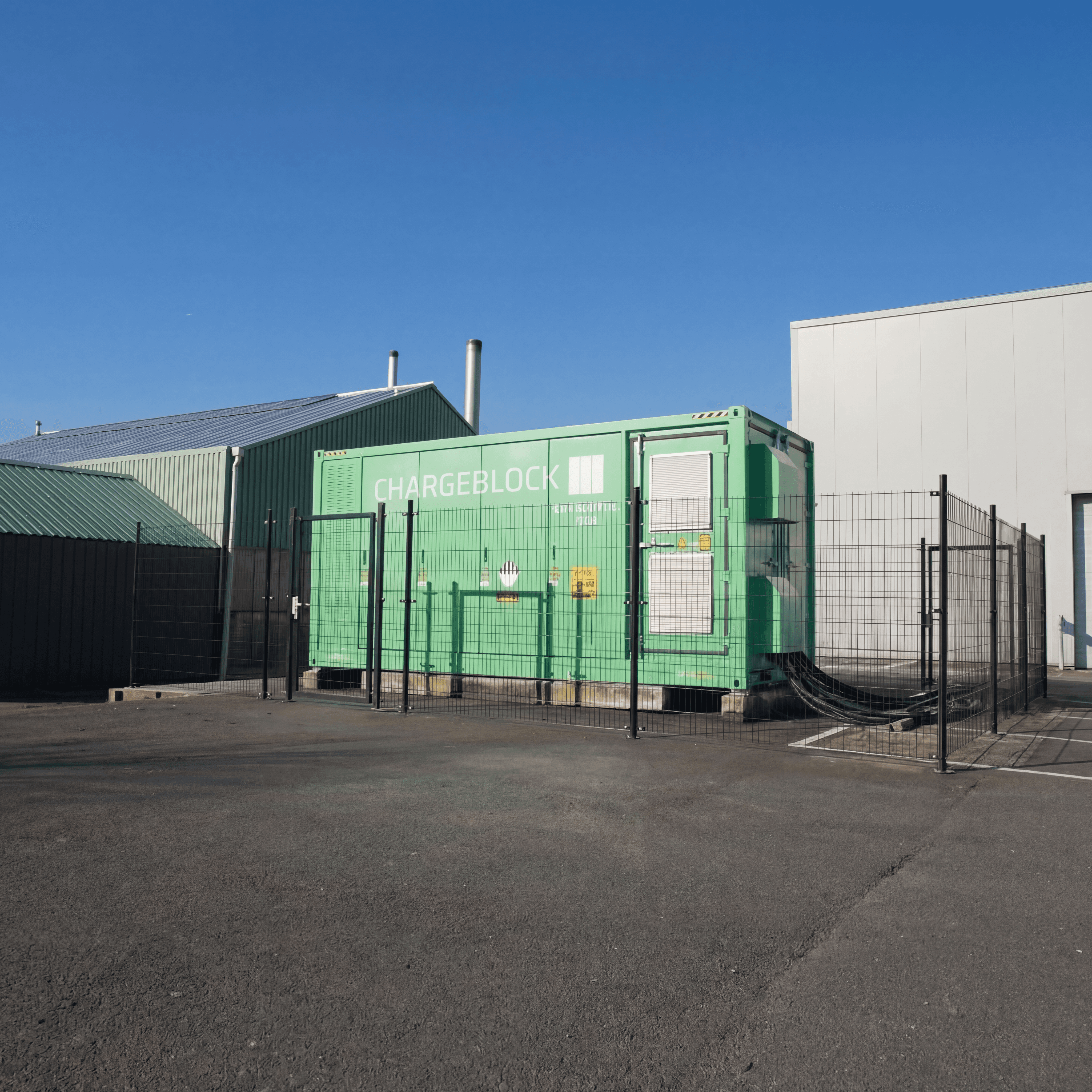
In the commercial and industrial sector, energy is increasingly about certainty and control over costs. Grid congestion slows down expansion, peak demand drives up grid costs, and dynamic tariffs cause greater price fluctuations. With a containerized energy storage system, companies can actively manage power, make better use of their own generation, and protect critical processes. ChargeBlock offers an approach in which technology, business continuity, and the grid connection are considered in relation to one another.
Battery containers
ChargeBlock
Commercial and Industrial
In the commercial and industrial sector, energy is increasingly about certainty and control over costs. Grid congestion slows down expansion, peak demand drives up grid costs, and dynamic tariffs cause greater price fluctuations. With a containerized energy storage system, companies can actively manage power, make better use of their own generation, and protect critical processes. ChargeBlock offers an approach in which technology, business continuity, and the grid connection are considered in relation to one another.
Battery containers
ChargeBlock
Commercial and Industrial
In the commercial and industrial sector, energy is increasingly about certainty and control over costs. Grid congestion slows down expansion, peak demand drives up grid costs, and dynamic tariffs cause greater price fluctuations. With a containerized energy storage system, companies can actively manage power, make better use of their own generation, and protect critical processes. ChargeBlock offers an approach in which technology, business continuity, and the grid connection are considered in relation to one another.
Leading partners
















Leading partners
Leading partners
See how battery storage fits your business.
Whitepaper for Commercial & Industrial
Thank you for your interest. Read the whitepaper to see how our solutions can optimize your energy management. For questions or professional advice, please contact us.
Tailored solutions
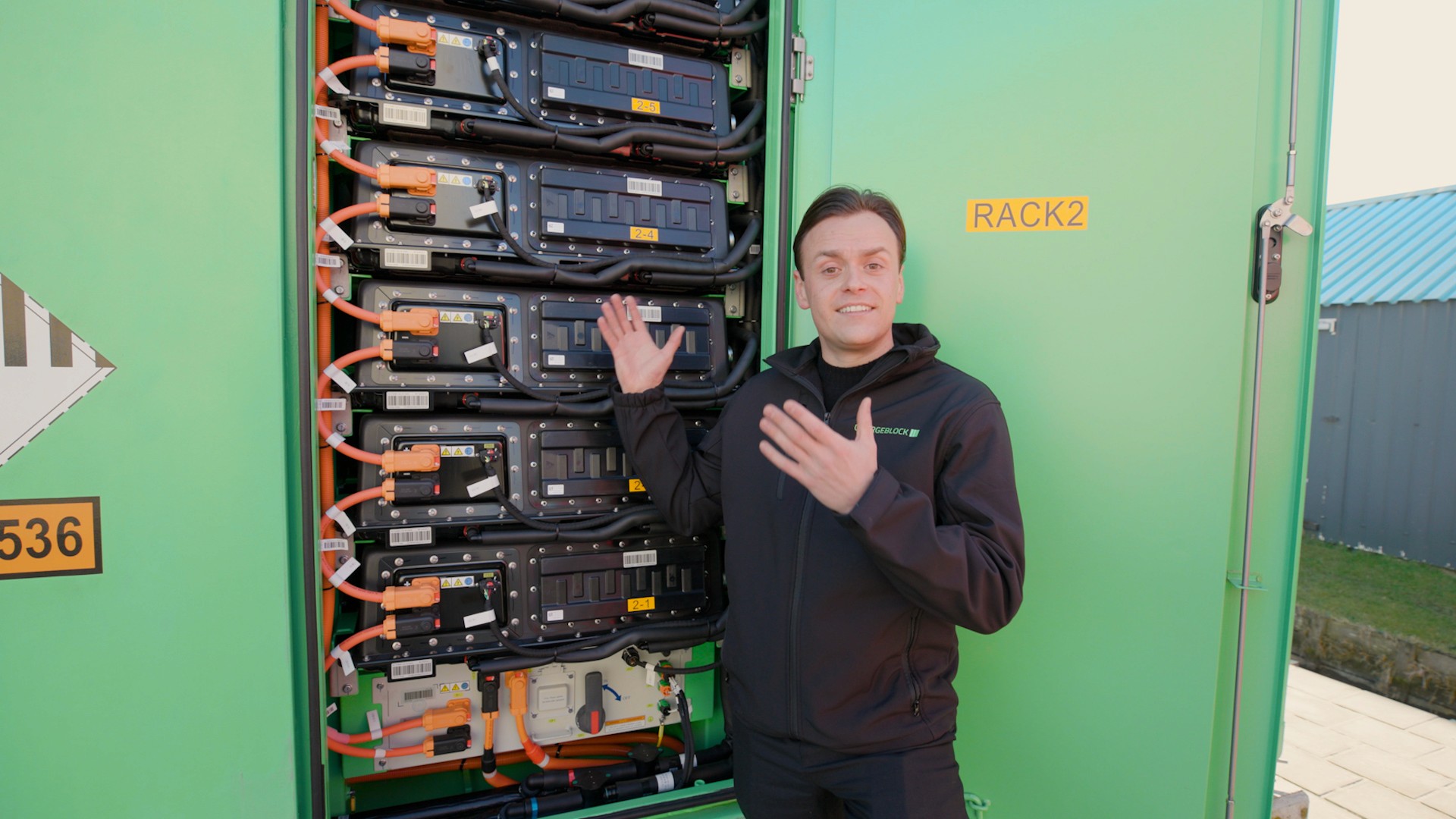
No standard solutions or white-label imports. ChargeBlock develops and configures battery containers entirely in-house, tailored to application, location, and scale—from individual units to large-scale systems.
System integration
ChargeBlock battery containers integrate easily with existing grid connections, generation, generators, shore power, and EMS platforms. This allows the system to fit directly into your current infrastructure.
Smart energy management
ChargeBlock combines EMS and BMS systems with AI-driven control for real-time monitoring, efficient energy management, and predictive maintenance. Based on consumption, generation, grid conditions, and market prices.
Excellent aftercare
ChargeBlock avoids white-label dependency and keeps critical components in stock. With active monitoring, fast service, and clear guarantees, we minimize downtime.
See how battery storage fits your business.
Whitepaper voor Commercieel & Industrie
Bedankt voor je interesse! Lees de whitepaper en ontdek hoe onze oplossingen jouw energiebeheer kunnen verbeteren. Heb je vragen of wil je persoonlijk advies? Neem gerust contact met ons op.
Tailored solutions
No standard solutions or white-label imports. ChargeBlock develops and configures battery containers entirely in-house, tailored to application, location, and scale—from individual units to large-scale systems.
System integration
ChargeBlock battery containers integrate easily with existing grid connections, generation, generators, shore power, and EMS platforms. This allows the system to fit directly into your current infrastructure.
Smart energy management
ChargeBlock combines EMS and BMS systems with AI-driven control for real-time monitoring, efficient energy management, and predictive maintenance. Based on consumption, generation, grid conditions, and market prices.
Excellent aftercare
ChargeBlock avoids white-label dependency and keeps critical components in stock. With active monitoring, fast service, and clear guarantees, we minimize downtime.
See how battery storage fits your business.
Whitepaper voor Commercieel & Industrie
Bedankt voor je interesse! Lees de whitepaper en ontdek hoe onze oplossingen jouw energiebeheer kunnen verbeteren. Heb je vragen of wil je persoonlijk advies? Neem gerust contact met ons op.
Tailored solutions
No standard solutions or white-label imports. ChargeBlock develops and configures battery containers entirely in-house, tailored to application, location, and scale—from individual units to large-scale systems.
System integration
ChargeBlock battery containers integrate easily with existing grid connections, generation, generators, shore power, and EMS platforms. This allows the system to fit directly into your current infrastructure.
Smart energy management
ChargeBlock combines EMS and BMS systems with AI-driven control for real-time monitoring, efficient energy management, and predictive maintenance. Based on consumption, generation, grid conditions, and market prices.
Excellent aftercare
ChargeBlock avoids white-label dependency and keeps critical components in stock. With active monitoring, fast service, and clear guarantees, we minimize downtime.
Why energy storage is now strategic for businesses
More and more companies are facing transmission constraints on the electricity grid, longer lead times for higher-capacity connections, and increasing electrification, for example through charging infrastructure, heat pumps, and electric furnaces.
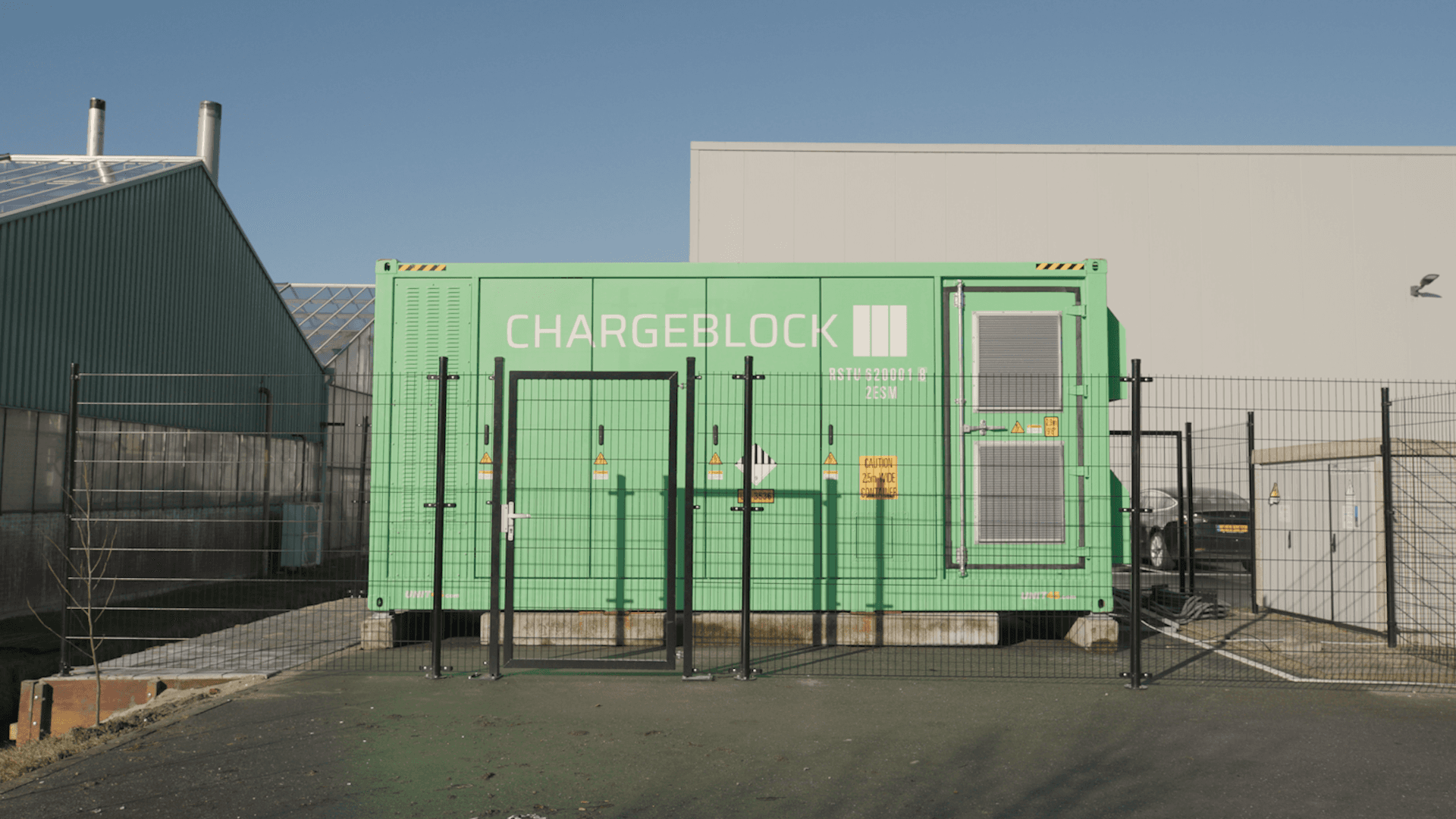
Energy storage adds flexibility: the system temporarily delivers additional power when the grid cannot and absorbs surpluses when demand is low. This makes storage a strategic part of energy management, alongside contracted capacity, metering data, and load balancing. As a specialist, ChargeBlock supports sites with variable consumption or high simultaneity to make optimal use of that controllability.
The most frequently asked questions about battery containers
How does a battery container help with grid congestion and peak load?
Our battery containers are used for peak shaving, zero feed-in, and behind-the-meter optimization. By deploying stored energy intelligently, you prevent exceeding contracted capacity and reduce dependence on the grid. This creates room for expansion without immediate grid reinforcement.
Can the battery container be integrated with our existing EMS or aggregator?
Is battery storage financially feasible for our organization?
Why energy storage is now strategic for businesses
More and more companies are facing transmission constraints on the electricity grid, longer lead times for higher-capacity connections, and increasing electrification, for example through charging infrastructure, heat pumps, and electric furnaces.
Energy storage adds flexibility: the system temporarily delivers additional power when the grid cannot and absorbs surpluses when demand is low. This makes storage a strategic part of energy management, alongside contracted capacity, metering data, and load balancing. As a specialist, ChargeBlock supports sites with variable consumption or high simultaneity to make optimal use of that controllability.
The most frequently asked questions about battery containers
How does a battery container help with grid congestion and peak load?
Our battery containers are used for peak shaving, zero feed-in, and behind-the-meter optimization. By deploying stored energy intelligently, you prevent exceeding contracted capacity and reduce dependence on the grid. This creates room for expansion without immediate grid reinforcement.
Can the battery container be integrated with our existing EMS or aggregator?
Is battery storage financially feasible for our organization?
Why energy storage is now strategic for businesses
More and more companies are facing transmission constraints on the electricity grid, longer lead times for higher-capacity connections, and increasing electrification, for example through charging infrastructure, heat pumps, and electric furnaces.
Energy storage adds flexibility: the system temporarily delivers additional power when the grid cannot and absorbs surpluses when demand is low. This makes storage a strategic part of energy management, alongside contracted capacity, metering data, and load balancing. As a specialist, ChargeBlock supports sites with variable consumption or high simultaneity to make optimal use of that controllability.
The most frequently asked questions about battery containers
How does a battery container help with grid congestion and peak load?
Our battery containers are used for peak shaving, zero feed-in, and behind-the-meter optimization. By deploying stored energy intelligently, you prevent exceeding contracted capacity and reduce dependence on the grid. This creates room for expansion without immediate grid reinforcement.
Can the battery container be integrated with our existing EMS or aggregator?
Is battery storage financially feasible for our organization?
Peak shaving: reducing peak load and limiting grid costs
With peak shaving, companies reduce the highest power peaks, which are often decisive for grid operator costs and internal capacity bottlenecks. The battery discharges during short, high peaks, for example when starting motors, cooling systems, or production lines, and charges again as soon as consumption normalizes. This keeps contracted capacity more stable and reduces the risk of exceedances.
In practice, this depends on properly configured power control, insight into 15-minute interval values, and alignment with business processes. The experts at ChargeBlock advise on how to ensure that comfort and production are not put under pressure.
Peak shaving: reducing peak load and limiting grid costs
With peak shaving, companies reduce the highest power peaks, which are often decisive for grid operator costs and internal capacity bottlenecks. The battery discharges during short, high peaks, for example when starting motors, cooling systems, or production lines, and charges again as soon as consumption normalizes. This keeps contracted capacity more stable and reduces the risk of exceedances.
In practice, this depends on properly configured power control, insight into 15-minute interval values, and alignment with business processes. The experts at ChargeBlock advise on how to ensure that comfort and production are not put under pressure.
Peak shaving: reducing peak load and limiting grid costs
With peak shaving, companies reduce the highest power peaks, which are often decisive for grid operator costs and internal capacity bottlenecks. The battery discharges during short, high peaks, for example when starting motors, cooling systems, or production lines, and charges again as soon as consumption normalizes. This keeps contracted capacity more stable and reduces the risk of exceedances.
In practice, this depends on properly configured power control, insight into 15-minute interval values, and alignment with business processes. The experts at ChargeBlock advise on how to ensure that comfort and production are not put under pressure.
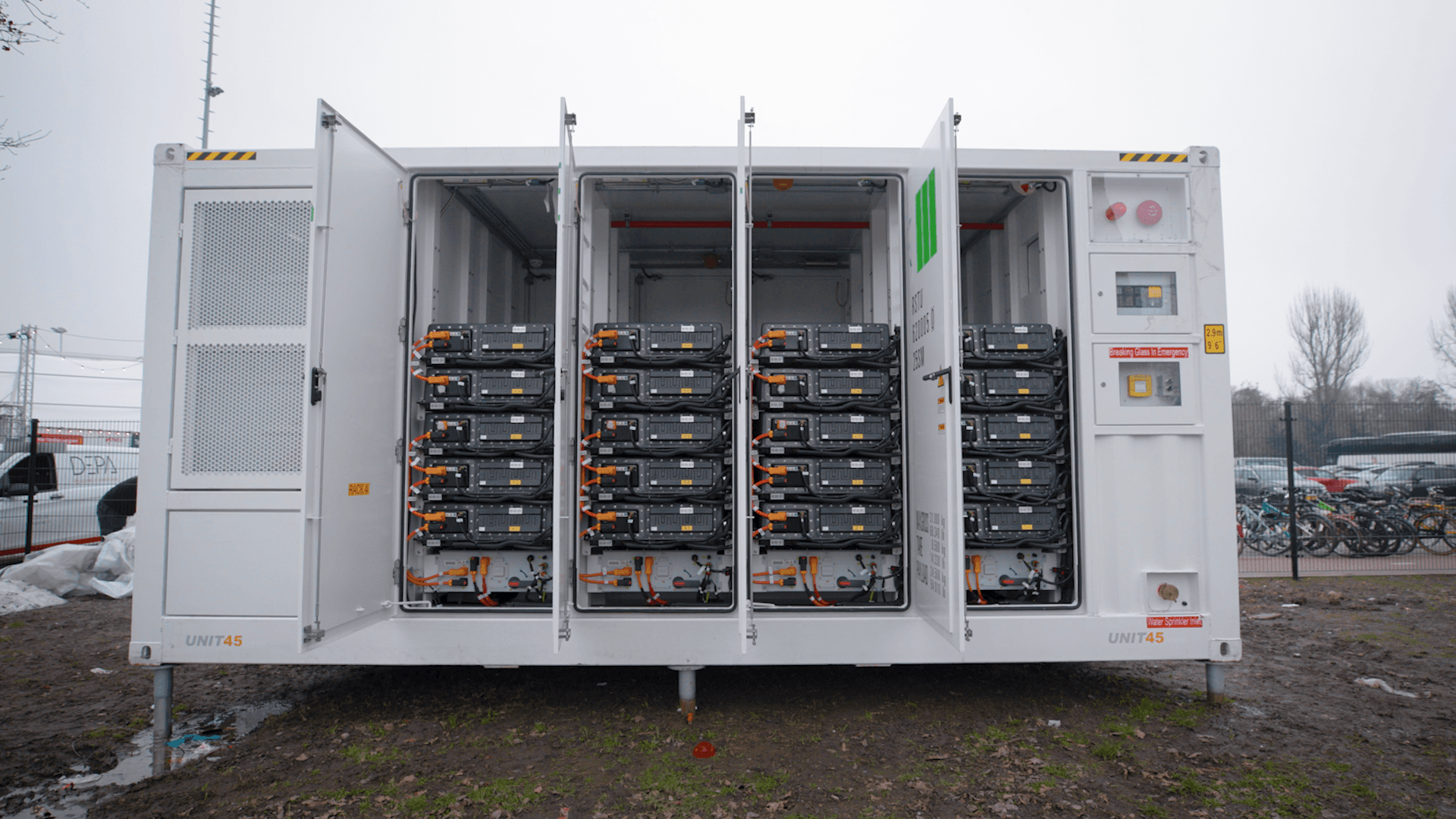
Maximum return from solar panels and your own generation
Many companies generate more during the day than they consume directly, while demand peaks in the morning, evening, or during specific shifts. Storage shifts that energy over time: self-consumption increases, feed-in becomes less dependent on available grid capacity, and the company is less sensitive to tariff fluctuations.
A battery container from ChargeBlock can serve as the link between the PV inverters, the main distribution board, and the energy management system, with control based on price, power, and operational priorities.
Maximum return from solar panels and your own generation
Many companies generate more during the day than they consume directly, while demand peaks in the morning, evening, or during specific shifts. Storage shifts that energy over time: self-consumption increases, feed-in becomes less dependent on available grid capacity, and the company is less sensitive to tariff fluctuations.
A battery container from ChargeBlock can serve as the link between the PV inverters, the main distribution board, and the energy management system, with control based on price, power, and operational priorities.
Maximum return from solar panels and your own generation
Many companies generate more during the day than they consume directly, while demand peaks in the morning, evening, or during specific shifts. Storage shifts that energy over time: self-consumption increases, feed-in becomes less dependent on available grid capacity, and the company is less sensitive to tariff fluctuations.
A battery container from ChargeBlock can serve as the link between the PV inverters, the main distribution board, and the energy management system, with control based on price, power, and operational priorities.
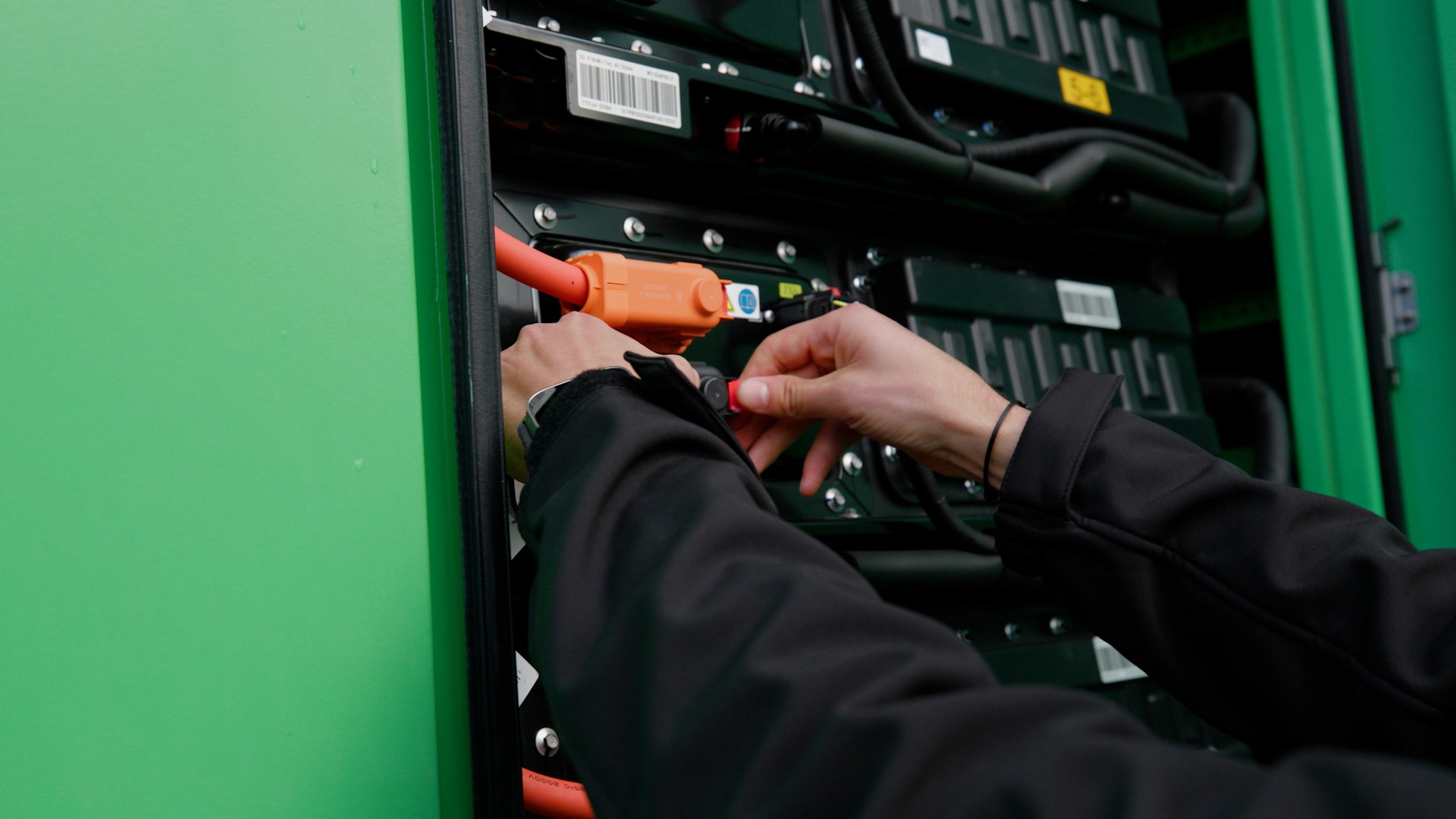
UPS and emergency power for critical business processes
In industry and logistics, a grid disturbance can immediately lead to production loss, quality issues, or failure of IT and control systems. Battery storage can then serve as a UPS, with fast switchover, stable voltage, and support for critical loads.
Depending on the required autonomy, the system can also work together with an emergency generator, with the battery bridging the first minutes and absorbing peaks. ChargeBlock considers aspects such as selectivity, black-start capabilities, redundancy, and a clear load-shedding plan, so that only essential processes are supplied with power.
UPS and emergency power for critical business processes
In industry and logistics, a grid disturbance can immediately lead to production loss, quality issues, or failure of IT and control systems. Battery storage can then serve as a UPS, with fast switchover, stable voltage, and support for critical loads.
Depending on the required autonomy, the system can also work together with an emergency generator, with the battery bridging the first minutes and absorbing peaks. ChargeBlock considers aspects such as selectivity, black-start capabilities, redundancy, and a clear load-shedding plan, so that only essential processes are supplied with power.
UPS and emergency power for critical business processes
In industry and logistics, a grid disturbance can immediately lead to production loss, quality issues, or failure of IT and control systems. Battery storage can then serve as a UPS, with fast switchover, stable voltage, and support for critical loads.
Depending on the required autonomy, the system can also work together with an emergency generator, with the battery bridging the first minutes and absorbing peaks. ChargeBlock considers aspects such as selectivity, black-start capabilities, redundancy, and a clear load-shedding plan, so that only essential processes are supplied with power.
Why ChargeBlock
The benefits
of ChargeBlock
At ChargeBlock, customer satisfaction comes first. We develop and supply battery containers for companies that want control over energy—technically, operationally, and financially.
Tailored solutions
No standard solutions or white-label imports. ChargeBlock develops and configures battery containers entirely in-house, tailored to application, location, and scale—from individual units to large-scale systems.
System integration
ChargeBlock battery containers integrate easily with existing grid connections, generation, generators, shore power, and EMS platforms. This allows the system to fit directly into your current infrastructure.
Smart energy management
ChargeBlock combines EMS and BMS systems with AI-driven control for real-time monitoring, efficient energy management, and predictive maintenance. Based on consumption, generation, grid conditions, and market prices.
Excellent aftercare
ChargeBlock avoids white-label dependency and keeps critical components in stock. With active monitoring, fast service, and clear guarantees, we minimize downtime.
Why ChargeBlock
The benefits
of ChargeBlock
At ChargeBlock, customer satisfaction comes first. We develop and supply battery containers for companies that want control over energy—technically, operationally, and financially.
Tailored solutions
No standard solutions or white-label imports. ChargeBlock develops and configures battery containers entirely in-house, tailored to application, location, and scale—from individual units to large-scale systems.
System integration
ChargeBlock battery containers integrate easily with existing grid connections, generation, generators, shore power, and EMS platforms. This allows the system to fit directly into your current infrastructure.
Smart energy management
ChargeBlock combines EMS and BMS systems with AI-driven control for real-time monitoring, efficient energy management, and predictive maintenance. Based on consumption, generation, grid conditions, and market prices.
Excellent aftercare
ChargeBlock avoids white-label dependency and keeps critical components in stock. With active monitoring, fast service, and clear guarantees, we minimize downtime.
Why ChargeBlock
The benefits
of ChargeBlock
At ChargeBlock, customer satisfaction comes first. We develop and supply battery containers for companies that want control over energy—technically, operationally, and financially.
Tailored solutions
No standard solutions or white-label imports. ChargeBlock develops and configures battery containers entirely in-house, tailored to application, location, and scale—from individual units to large-scale systems.
System integration
ChargeBlock battery containers integrate easily with existing grid connections, generation, generators, shore power, and EMS platforms. This allows the system to fit directly into your current infrastructure.
Smart energy management
ChargeBlock combines EMS and BMS systems with AI-driven control for real-time monitoring, efficient energy management, and predictive maintenance. Based on consumption, generation, grid conditions, and market prices.
Excellent aftercare
ChargeBlock avoids white-label dependency and keeps critical components in stock. With active monitoring, fast service, and clear guarantees, we minimize downtime.

Design choices: capacity, safety, integration, and compliance
A suitable system starts with the objective, such as cost reduction, business continuity, postponing grid reinforcement, or optimizing PV generation. Based on that, the energy capacity (kWh), power (kW), number of cycles, and required response time are determined. In ChargeBlock’s solutions, safety comes first, with attention to thermal management, fire detection, compartmentalization, clear procedures, and periodic maintenance.
By properly arranging integration with the metering infrastructure, SCADA/EMS, and existing protections, unwanted feed-in and new peaks are prevented. ChargeBlock also takes permits, site requirements, noise aspects, and alignment with the grid code into account, so the installation demonstrably operates reliably and with high operational availability.
Design choices: capacity, safety, integration, and compliance
A suitable system starts with the objective, such as cost reduction, business continuity, postponing grid reinforcement, or optimizing PV generation. Based on that, the energy capacity (kWh), power (kW), number of cycles, and required response time are determined. In ChargeBlock’s solutions, safety comes first, with attention to thermal management, fire detection, compartmentalization, clear procedures, and periodic maintenance.
By properly arranging integration with the metering infrastructure, SCADA/EMS, and existing protections, unwanted feed-in and new peaks are prevented. ChargeBlock also takes permits, site requirements, noise aspects, and alignment with the grid code into account, so the installation demonstrably operates reliably and with high operational availability.
Design choices: capacity, safety, integration, and compliance
A suitable system starts with the objective, such as cost reduction, business continuity, postponing grid reinforcement, or optimizing PV generation. Based on that, the energy capacity (kWh), power (kW), number of cycles, and required response time are determined. In ChargeBlock’s solutions, safety comes first, with attention to thermal management, fire detection, compartmentalization, clear procedures, and periodic maintenance.
By properly arranging integration with the metering infrastructure, SCADA/EMS, and existing protections, unwanted feed-in and new peaks are prevented. ChargeBlock also takes permits, site requirements, noise aspects, and alignment with the grid code into account, so the installation demonstrably operates reliably and with high operational availability.
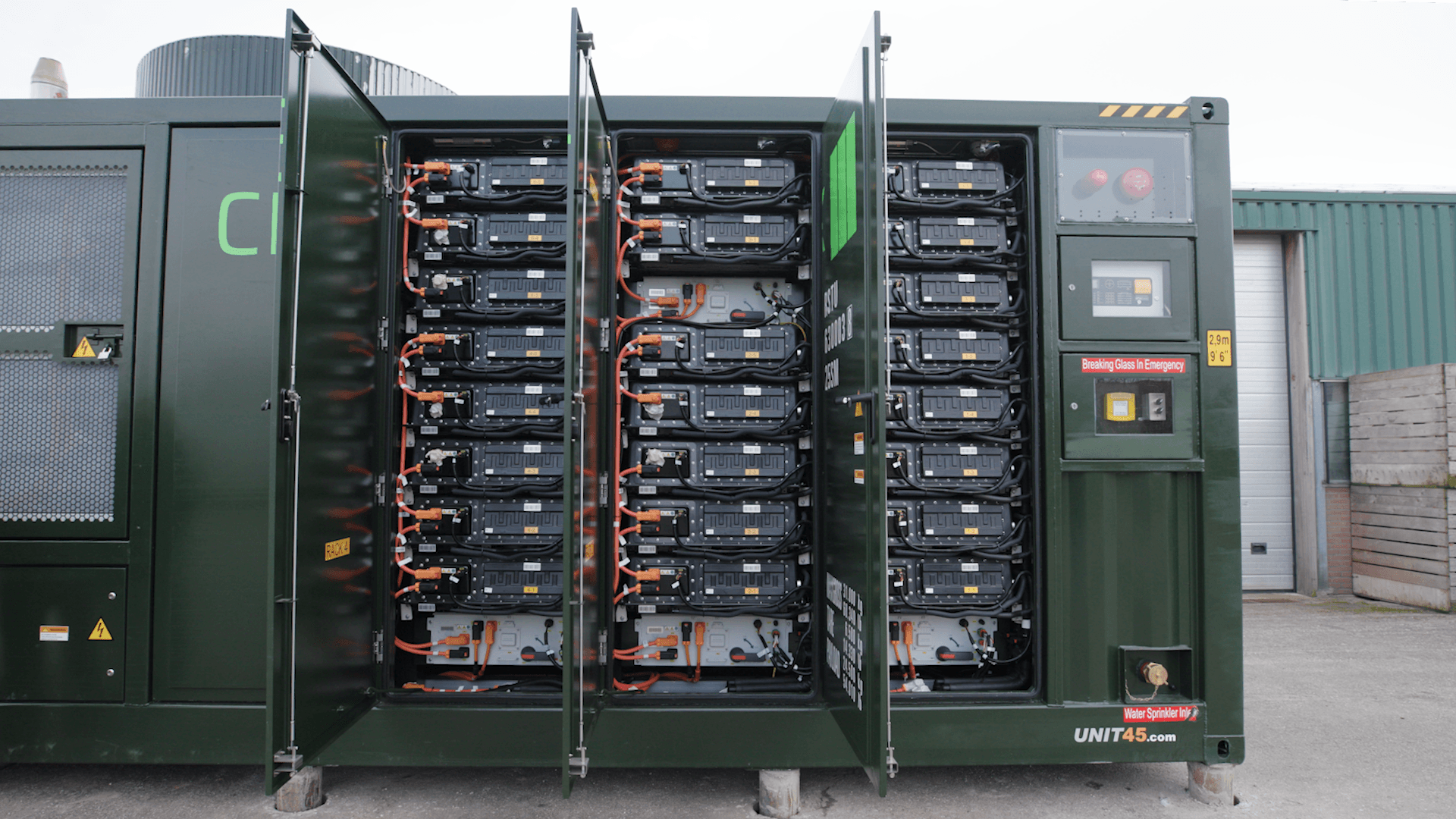
and scalable battery storage
Customer service
Solutions
Subscribe to our newsletter to stay informed.
By signing up, you agree to the privacy statement and the general terms and conditions of ChargeBlock B.V. You can unsubscribe at any time.
Rated
4.8/5.0

Developed
in the Netherlands

and scalable battery storage
Customer service
Solutions
Subscribe to our newsletter to stay informed.
By signing up, you agree to the privacy statement and the general terms and conditions of ChargeBlock B.V. You can unsubscribe at any time.
Rated
4.8/5.0
Developed
in the Netherlands
and scalable battery storage
Customer service
Solutions
Subscribe to our newsletter to stay informed.
By signing up, you agree to the privacy statement and the general terms and conditions of ChargeBlock B.V. You can unsubscribe at any time.
Rated
4.8/5.0
Developed
in the Netherlands