
Battery containers
ChargeBlock
Maritime Industry
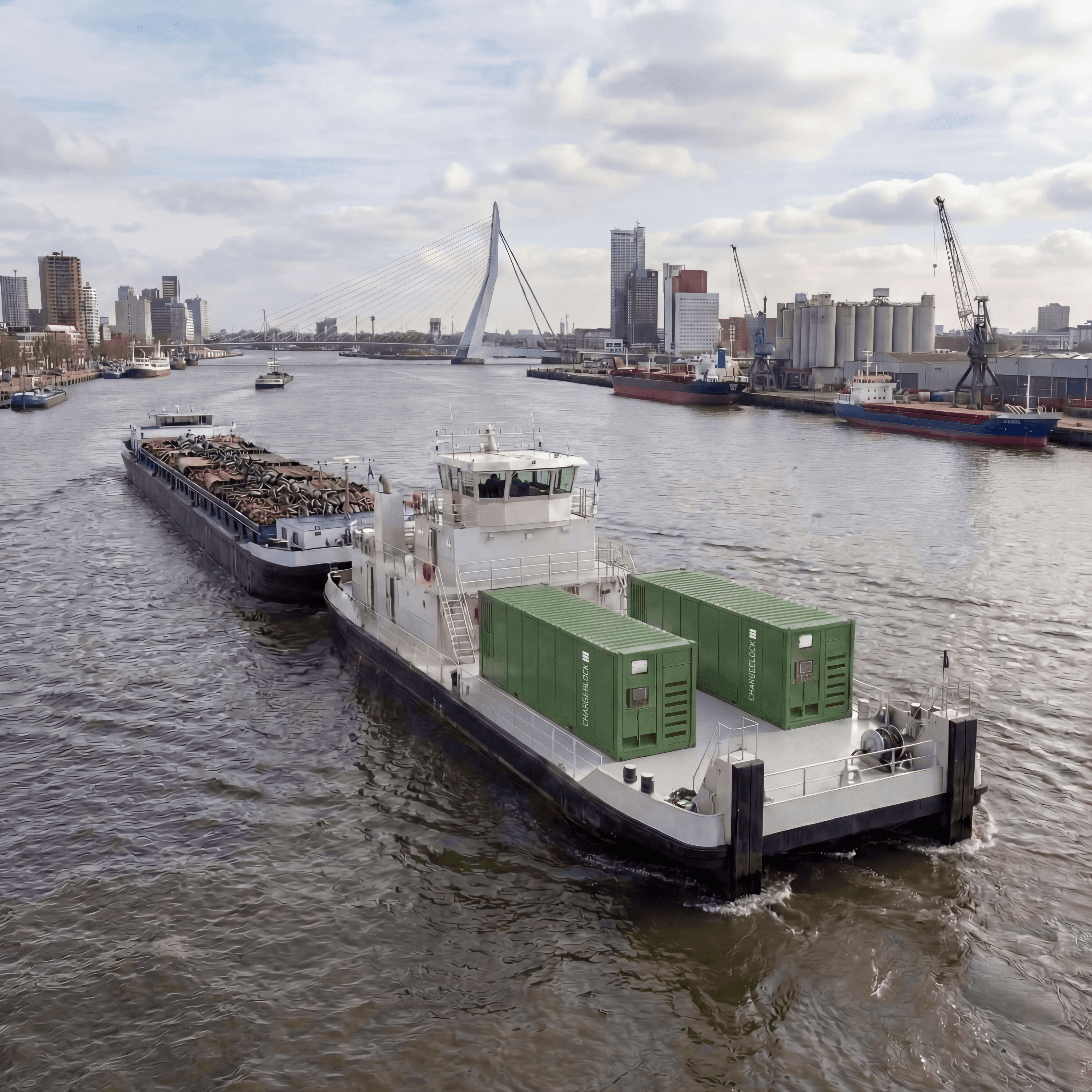
The maritime industry is under pressure to rapidly reduce emissions, noise, and fuel consumption, without compromising operational reliability. Battery containers and other forms of energy storage play a key role in this, both as mobile or fixed shore power supplies in ports and as a powerful buffer on board. With ChargeBlock’s solutions, vessels at berth can switch to cold ironing and absorb peak loads during sailing, making hybrid propulsion more efficient and more predictable.
Battery containers
ChargeBlock
Maritime Industry
The maritime industry is under pressure to rapidly reduce emissions, noise, and fuel consumption, without compromising operational reliability. Battery containers and other forms of energy storage play a key role in this, both as mobile or fixed shore power supplies in ports and as a powerful buffer on board. With ChargeBlock’s solutions, vessels at berth can switch to cold ironing and absorb peak loads during sailing, making hybrid propulsion more efficient and more predictable.
Battery containers
ChargeBlock
Maritime Industry
The maritime industry is under pressure to rapidly reduce emissions, noise, and fuel consumption, without compromising operational reliability. Battery containers and other forms of energy storage play a key role in this, both as mobile or fixed shore power supplies in ports and as a powerful buffer on board. With ChargeBlock’s solutions, vessels at berth can switch to cold ironing and absorb peak loads during sailing, making hybrid propulsion more efficient and more predictable.
Leading partners
















Leading partners
See how battery storage fits your business.
One-pager for the maritime industry
Thank you for your interest. Read the one-pager to see how our solutions can improve your energy management. If you have questions or would like personal advice, please contact us.
Tailored solutions
No standard solutions or white-label imports. ChargeBlock develops and configures battery containers entirely in-house, tailored to application, location, and scale—from individual units to large-scale systems.
System integration
ChargeBlock battery containers integrate easily with existing grid connections, generation, generators, shore power, and EMS platforms. This allows the system to fit directly into your current infrastructure.
Smart energy management
ChargeBlock combines EMS and BMS systems with AI-driven control for real-time monitoring, efficient energy management, and predictive maintenance. Based on consumption, generation, grid conditions, and market prices.
Excellent aftercare
ChargeBlock avoids white-label dependency and keeps critical components in stock. With active monitoring, fast service, and clear guarantees, we minimize downtime.
See how battery storage fits your business.
One-pager for the maritime industry
Thank you for your interest. Read the one-pager to see how our solutions can improve your energy management. If you have questions or would like personal advice, please contact us.
Tailored solutions
No standard solutions or white-label imports. ChargeBlock develops and configures battery containers entirely in-house, tailored to application, location, and scale—from individual units to large-scale systems.
System integration
ChargeBlock battery containers integrate easily with existing grid connections, generation, generators, shore power, and EMS platforms. This allows the system to fit directly into your current infrastructure.
Smart energy management
ChargeBlock combines EMS and BMS systems with AI-driven control for real-time monitoring, efficient energy management, and predictive maintenance. Based on consumption, generation, grid conditions, and market prices.
Excellent aftercare
ChargeBlock avoids white-label dependency and keeps critical components in stock. With active monitoring, fast service, and clear guarantees, we minimize downtime.
See how battery storage fits your business.
One-pager for the maritime industry
Thank you for your interest. Read the one-pager to see how our solutions can improve your energy management. If you have questions or would like personal advice, please contact us.
Tailored solutions
No standard solutions or white-label imports. ChargeBlock develops and configures battery containers entirely in-house, tailored to application, location, and scale—from individual units to large-scale systems.
System integration
ChargeBlock battery containers integrate easily with existing grid connections, generation, generators, shore power, and EMS platforms. This allows the system to fit directly into your current infrastructure.
Smart energy management
ChargeBlock combines EMS and BMS systems with AI-driven control for real-time monitoring, efficient energy management, and predictive maintenance. Based on consumption, generation, grid conditions, and market prices.
Excellent aftercare
ChargeBlock avoids white-label dependency and keeps critical components in stock. With active monitoring, fast service, and clear guarantees, we minimize downtime.
Electrification in ports: shore power and cold ironing
With shore power, hotel loads and port activities can be powered without running diesel generators. Cold ironing reduces local NOx, SOx, and particulate emissions, while also reducing vibrations and noise, which is especially important in urban port areas.
ChargeBlock’s energy storage also helps smooth peaks in power demand, allowing a connection with limited grid capacity to still deliver higher power for short periods. In addition, battery storage makes variable generation, such as wind or solar energy at the terminal, more usable for ships, charging infrastructure, and cranes.
The most frequently asked questions about battery containers
How does a battery container help with grid congestion and peak load?
Our battery containers are used for peak shaving, zero feed-in, and behind-the-meter optimization. By deploying stored energy intelligently, you prevent exceeding contracted capacity and reduce dependence on the grid. This creates room for expansion without immediate grid reinforcement.
Can the battery container be integrated with our existing EMS or aggregator?
Is battery storage financially feasible for our organization?
Electrification in ports: shore power and cold ironing
With shore power, hotel loads and port activities can be powered without running diesel generators. Cold ironing reduces local NOx, SOx, and particulate emissions, while also reducing vibrations and noise, which is especially important in urban port areas.
ChargeBlock’s energy storage also helps smooth peaks in power demand, allowing a connection with limited grid capacity to still deliver higher power for short periods. In addition, battery storage makes variable generation, such as wind or solar energy at the terminal, more usable for ships, charging infrastructure, and cranes.
The most frequently asked questions about battery containers
How does a battery container help with grid congestion and peak load?
Our battery containers are used for peak shaving, zero feed-in, and behind-the-meter optimization. By deploying stored energy intelligently, you prevent exceeding contracted capacity and reduce dependence on the grid. This creates room for expansion without immediate grid reinforcement.
Can the battery container be integrated with our existing EMS or aggregator?
Is battery storage financially feasible for our organization?
Electrification in ports: shore power and cold ironing
With shore power, hotel loads and port activities can be powered without running diesel generators. Cold ironing reduces local NOx, SOx, and particulate emissions, while also reducing vibrations and noise, which is especially important in urban port areas.
ChargeBlock’s energy storage also helps smooth peaks in power demand, allowing a connection with limited grid capacity to still deliver higher power for short periods. In addition, battery storage makes variable generation, such as wind or solar energy at the terminal, more usable for ships, charging infrastructure, and cranes.
The most frequently asked questions about battery containers
How does a battery container help with grid congestion and peak load?
Our battery containers are used for peak shaving, zero feed-in, and behind-the-meter optimization. By deploying stored energy intelligently, you prevent exceeding contracted capacity and reduce dependence on the grid. This creates room for expansion without immediate grid reinforcement.
Can the battery container be integrated with our existing EMS or aggregator?
Is battery storage financially feasible for our organization?

Battery containers as a mobile or fixed energy hub
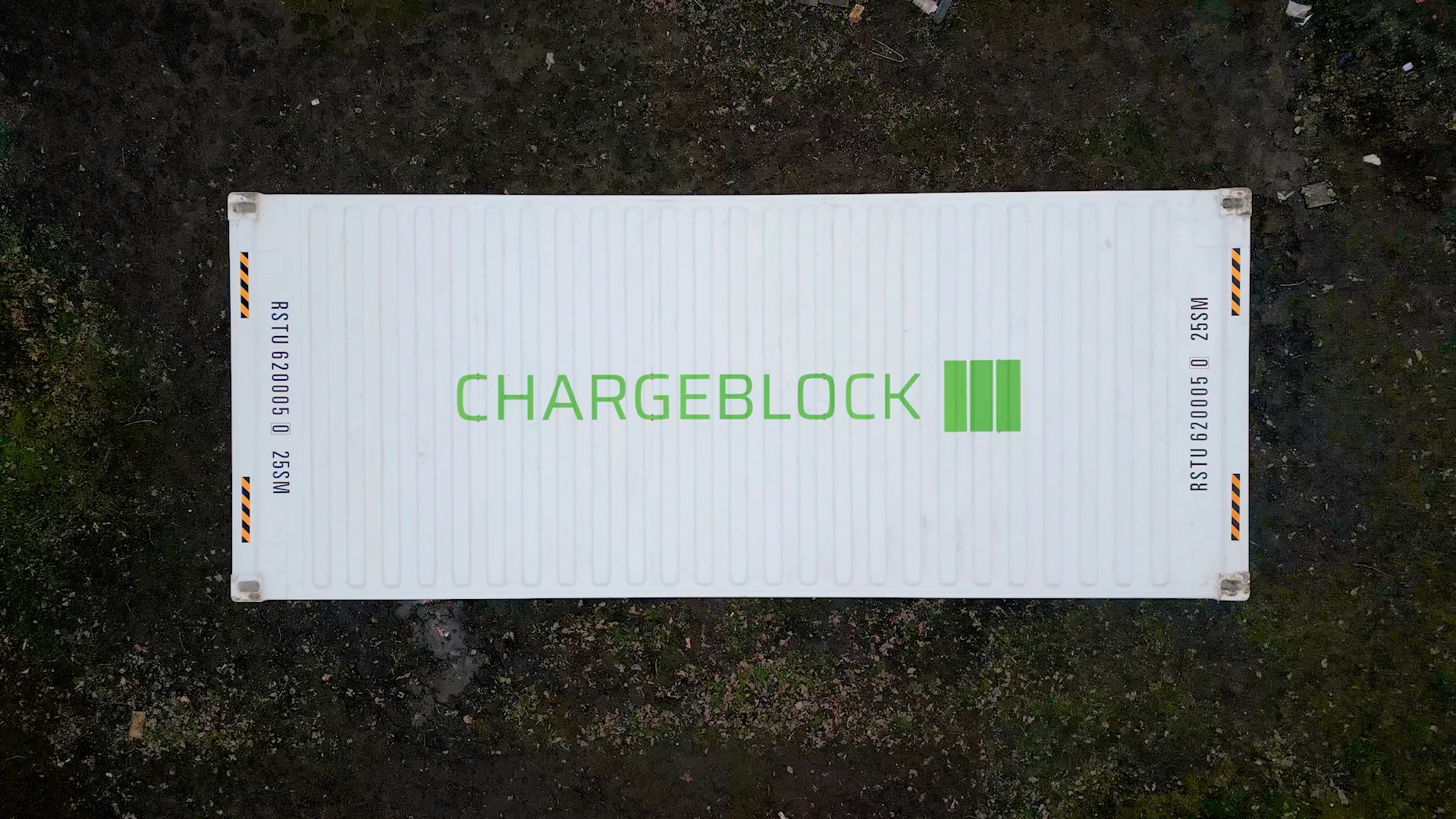
A container-based solution is attractive because of standardization, scalability, and rapid deployment on quays, terminals, or temporary work locations. A battery container from ChargeBlock can serve as a temporary shore power source during grid reinforcement, as an emergency provision during outages, or as a permanent buffer within a microgrid. In practice, it comes down to the power class (kW), energy capacity (kWh), charge and discharge profiles, and integration with inverters and transformers. This creates a flexible energy hub that can adapt to seasonal peaks and changing berths.
Battery containers as a mobile or fixed energy hub
A container-based solution is attractive because of standardization, scalability, and rapid deployment on quays, terminals, or temporary work locations. A battery container from ChargeBlock can serve as a temporary shore power source during grid reinforcement, as an emergency provision during outages, or as a permanent buffer within a microgrid. In practice, it comes down to the power class (kW), energy capacity (kWh), charge and discharge profiles, and integration with inverters and transformers. This creates a flexible energy hub that can adapt to seasonal peaks and changing berths.
Battery containers as a mobile or fixed energy hub
A container-based solution is attractive because of standardization, scalability, and rapid deployment on quays, terminals, or temporary work locations. A battery container from ChargeBlock can serve as a temporary shore power source during grid reinforcement, as an emergency provision during outages, or as a permanent buffer within a microgrid. In practice, it comes down to the power class (kW), energy capacity (kWh), charge and discharge profiles, and integration with inverters and transformers. This creates a flexible energy hub that can adapt to seasonal peaks and changing berths.

Hybrid sailing: peak shaving and fuel savings on board
On board, energy storage supports hybrid propulsion by supplying power during acceleration, maneuvering, and DP operations (dynamic positioning). As a result, generators can run more steadily and efficiently, with less idling power and less wear.
Batteries also enable peak shaving: short-term power demand is then supplied from storage, meaning fewer generators need to be online. For ferries, workboats, and inland shipping, ChargeBlock specialists advise on how this directly leads to lower fuel consumption and a more favorable emissions profile, without compromising operational flexibility.
Hybrid sailing: peak shaving and fuel savings on board
On board, energy storage supports hybrid propulsion by supplying power during acceleration, maneuvering, and DP operations (dynamic positioning). As a result, generators can run more steadily and efficiently, with less idling power and less wear.
Batteries also enable peak shaving: short-term power demand is then supplied from storage, meaning fewer generators need to be online. For ferries, workboats, and inland shipping, ChargeBlock specialists advise on how this directly leads to lower fuel consumption and a more favorable emissions profile, without compromising operational flexibility.
Hybrid sailing: peak shaving and fuel savings on board
On board, energy storage supports hybrid propulsion by supplying power during acceleration, maneuvering, and DP operations (dynamic positioning). As a result, generators can run more steadily and efficiently, with less idling power and less wear.
Batteries also enable peak shaving: short-term power demand is then supplied from storage, meaning fewer generators need to be online. For ferries, workboats, and inland shipping, ChargeBlock specialists advise on how this directly leads to lower fuel consumption and a more favorable emissions profile, without compromising operational flexibility.

Spinning reserve and reliability in critical operations
In maritime applications, redundancy is essential. The battery systems supplied by ChargeBlock can provide spinning reserve, i.e., immediately available power in the event of failures or sudden load changes, preventing blackouts and voltage dips. This is relevant for safety-critical systems, cargo handling, and the continuity of passenger services.
A sound design takes response time, short-circuit withstand capability, protection selectivity, and interaction with generators and energy management systems (EMS) into account. In this way, energy storage is not only a sustainability measure, but also a means of increasing operational reliability.
Spinning reserve and reliability in critical operations
In maritime applications, redundancy is essential. The battery systems supplied by ChargeBlock can provide spinning reserve, i.e., immediately available power in the event of failures or sudden load changes, preventing blackouts and voltage dips. This is relevant for safety-critical systems, cargo handling, and the continuity of passenger services.
A sound design takes response time, short-circuit withstand capability, protection selectivity, and interaction with generators and energy management systems (EMS) into account. In this way, energy storage is not only a sustainability measure, but also a means of increasing operational reliability.
Spinning reserve and reliability in critical operations
In maritime applications, redundancy is essential. The battery systems supplied by ChargeBlock can provide spinning reserve, i.e., immediately available power in the event of failures or sudden load changes, preventing blackouts and voltage dips. This is relevant for safety-critical systems, cargo handling, and the continuity of passenger services.
A sound design takes response time, short-circuit withstand capability, protection selectivity, and interaction with generators and energy management systems (EMS) into account. In this way, energy storage is not only a sustainability measure, but also a means of increasing operational reliability.
Why ChargeBlock
The benefits
of ChargeBlock
At ChargeBlock, customer satisfaction comes first. We develop and supply battery containers for companies that want control over energy—technically, operationally, and financially.
Tailored solutions
No standard solutions or white-label imports. ChargeBlock develops and configures battery containers entirely in-house, tailored to application, location, and scale—from individual units to large-scale systems.
System integration
ChargeBlock battery containers integrate easily with existing grid connections, generation, generators, shore power, and EMS platforms. This allows the system to fit directly into your current infrastructure.
Smart energy management
ChargeBlock combines EMS and BMS systems with AI-driven control for real-time monitoring, efficient energy management, and predictive maintenance. Based on consumption, generation, grid conditions, and market prices.
Excellent aftercare
ChargeBlock avoids white-label dependency and keeps critical components in stock. With active monitoring, fast service, and clear guarantees, we minimize downtime.
Why ChargeBlock
The benefits
of ChargeBlock
At ChargeBlock, customer satisfaction comes first. We develop and supply battery containers for companies that want control over energy—technically, operationally, and financially.
Tailored solutions
No standard solutions or white-label imports. ChargeBlock develops and configures battery containers entirely in-house, tailored to application, location, and scale—from individual units to large-scale systems.
System integration
ChargeBlock battery containers integrate easily with existing grid connections, generation, generators, shore power, and EMS platforms. This allows the system to fit directly into your current infrastructure.
Smart energy management
ChargeBlock combines EMS and BMS systems with AI-driven control for real-time monitoring, efficient energy management, and predictive maintenance. Based on consumption, generation, grid conditions, and market prices.
Excellent aftercare
ChargeBlock avoids white-label dependency and keeps critical components in stock. With active monitoring, fast service, and clear guarantees, we minimize downtime.
Why ChargeBlock
The benefits
of ChargeBlock
At ChargeBlock, customer satisfaction comes first. We develop and supply battery containers for companies that want control over energy—technically, operationally, and financially.
Tailored solutions
No standard solutions or white-label imports. ChargeBlock develops and configures battery containers entirely in-house, tailored to application, location, and scale—from individual units to large-scale systems.
System integration
ChargeBlock battery containers integrate easily with existing grid connections, generation, generators, shore power, and EMS platforms. This allows the system to fit directly into your current infrastructure.
Smart energy management
ChargeBlock combines EMS and BMS systems with AI-driven control for real-time monitoring, efficient energy management, and predictive maintenance. Based on consumption, generation, grid conditions, and market prices.
Excellent aftercare
ChargeBlock avoids white-label dependency and keeps critical components in stock. With active monitoring, fast service, and clear guarantees, we minimize downtime.
Safety, regulation, and integration with grid and vessel
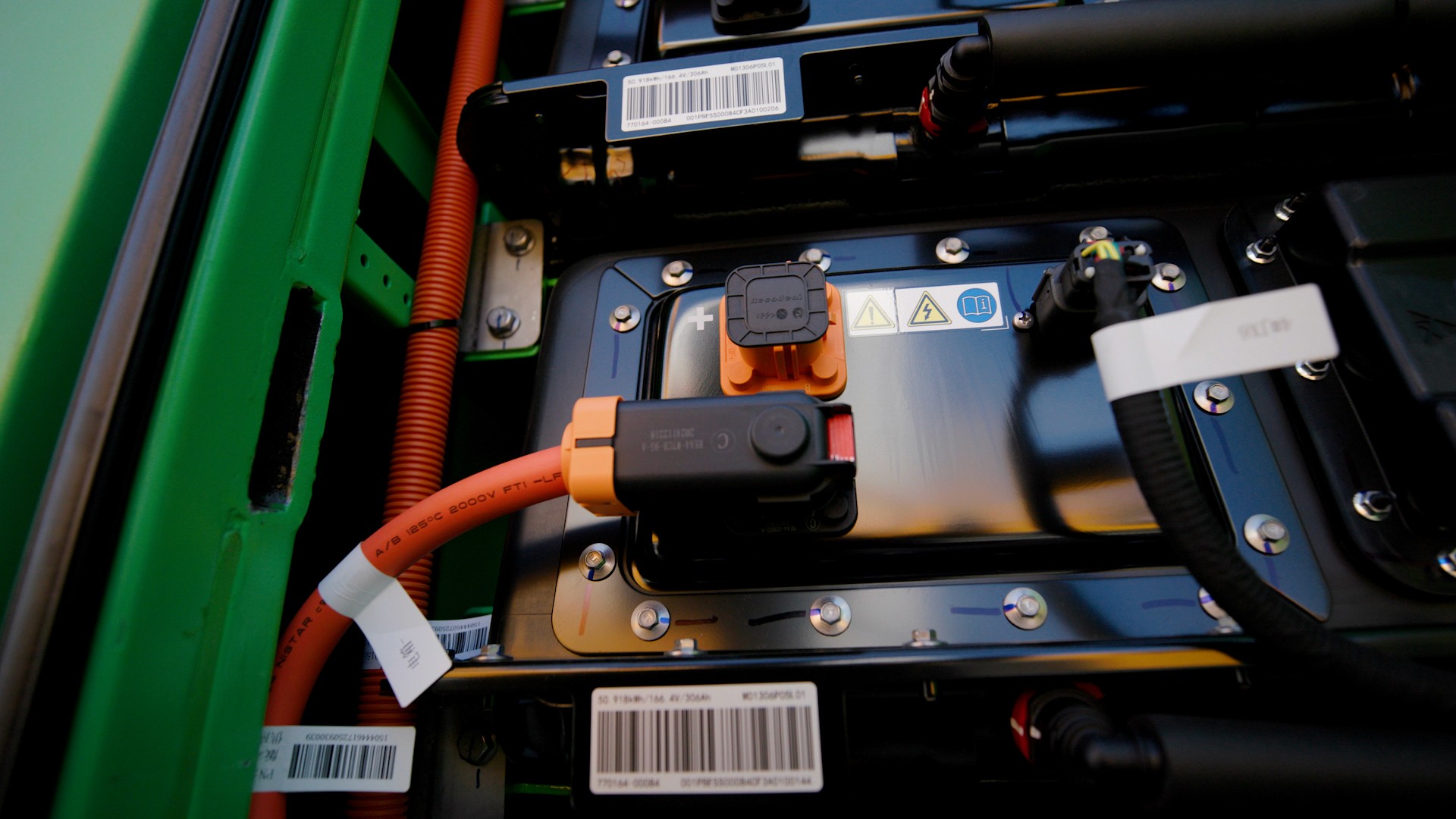
A successful implementation requires more than sufficient capacity alone. It is important to pay attention to thermal management, fire detection, compartmentalization, and clear charging procedures in port areas.
Integration is also critical, for example regarding the grid connection (voltage, harmonics, and power), synchronization with onboard systems, and cybersecurity around the EMS and remote monitoring. During procurement and engineering by ChargeBlock, class requirements, port regulations, and maintenance concepts are also taken into account, such as inspections, degradation, and second-life applications. Those who address these boundary conditions early build a robust solution that performs reliably both in port and at sea.
Do you want to determine which battery container or shore power solution fits your vessel type, berth profile, and power demand? ChargeBlock helps you map load peaks, the desired autonomy, and any grid constraints, and translate these into a scalable design for storage and integration.
Safety, regulation, and integration with grid and vessel
A successful implementation requires more than sufficient capacity alone. It is important to pay attention to thermal management, fire detection, compartmentalization, and clear charging procedures in port areas.
Integration is also critical, for example regarding the grid connection (voltage, harmonics, and power), synchronization with onboard systems, and cybersecurity around the EMS and remote monitoring. During procurement and engineering by ChargeBlock, class requirements, port regulations, and maintenance concepts are also taken into account, such as inspections, degradation, and second-life applications. Those who address these boundary conditions early build a robust solution that performs reliably both in port and at sea.
Do you want to determine which battery container or shore power solution fits your vessel type, berth profile, and power demand? ChargeBlock helps you map load peaks, the desired autonomy, and any grid constraints, and translate these into a scalable design for storage and integration.
Safety, regulation, and integration with grid and vessel
A successful implementation requires more than sufficient capacity alone. It is important to pay attention to thermal management, fire detection, compartmentalization, and clear charging procedures in port areas.
Integration is also critical, for example regarding the grid connection (voltage, harmonics, and power), synchronization with onboard systems, and cybersecurity around the EMS and remote monitoring. During procurement and engineering by ChargeBlock, class requirements, port regulations, and maintenance concepts are also taken into account, such as inspections, degradation, and second-life applications. Those who address these boundary conditions early build a robust solution that performs reliably both in port and at sea.
Do you want to determine which battery container or shore power solution fits your vessel type, berth profile, and power demand? ChargeBlock helps you map load peaks, the desired autonomy, and any grid constraints, and translate these into a scalable design for storage and integration.
Products in the spotlight


Products in the spotlight
Products in the spotlight
and scalable battery storage
Customer service
Solutions
Subscribe to our newsletter to stay informed.
By signing up, you agree to the privacy statement and the general terms and conditions of ChargeBlock B.V. You can unsubscribe at any time.
Rated
4.8/5.0

Developed
in the Netherlands

and scalable battery storage
Customer service
Solutions
Subscribe to our newsletter to stay informed.
By signing up, you agree to the privacy statement and the general terms and conditions of ChargeBlock B.V. You can unsubscribe at any time.
Rated
4.8/5.0
Developed
in the Netherlands
and scalable battery storage
Customer service
Solutions
Subscribe to our newsletter to stay informed.
By signing up, you agree to the privacy statement and the general terms and conditions of ChargeBlock B.V. You can unsubscribe at any time.
Rated
4.8/5.0
Developed
in the Netherlands