
Battery containers
ChargeBlock
Mobile energy storage & battery containers for construction, events, and temporary projects
Many construction sites, events, and temporary project locations lack sufficient grid capacity. Traditionally, this results in dependency on diesel generators: high fuel costs, noise nuisance, and growing pressure from stricter emission standards, while energy demand per location and per moment can vary significantly.
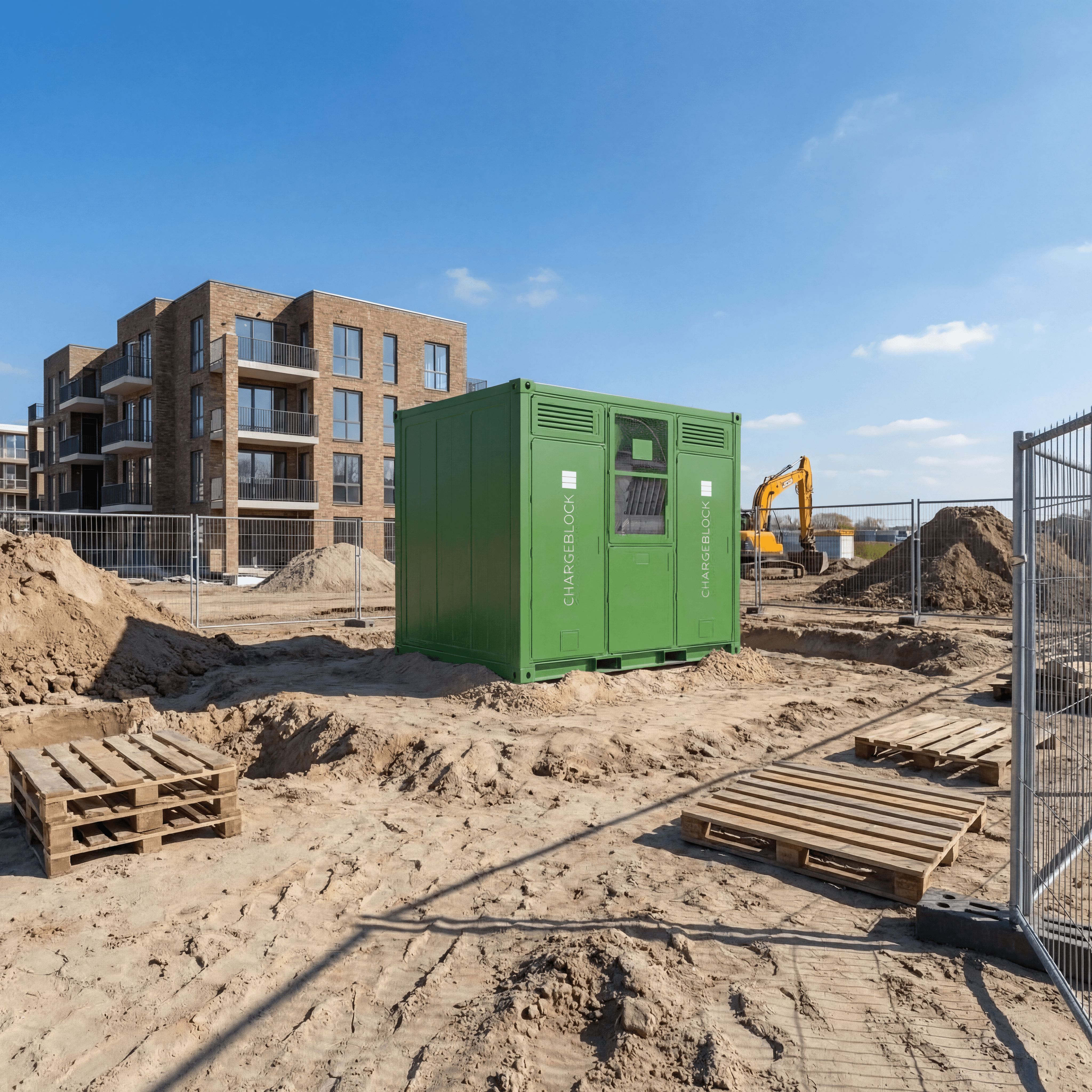
A mobile battery container from ChargeBlock delivers energy without a permanent grid connection: quiet, emission-free on-site, and flexible enough for fluctuating demand. These solutions are suitable for construction sites, events, temporary charging locations for electric transport, and infrastructure projects. Due to the robust container design and the plug-and-play setup, the system is quickly transported, simple to connect, and easily scaled to the energy demand of the moment.
Battery containers
ChargeBlock
Mobile energy storage & battery containers for construction, events, and temporary projects
Many construction sites, events, and temporary project locations lack sufficient grid capacity. Traditionally, this results in dependency on diesel generators: high fuel costs, noise nuisance, and growing pressure from stricter emission standards, while energy demand per location and per moment can vary significantly.
A mobile battery container from ChargeBlock delivers energy without a permanent grid connection: quiet, emission-free on-site, and flexible enough for fluctuating demand. These solutions are suitable for construction sites, events, temporary charging locations for electric transport, and infrastructure projects. Due to the robust container design and the plug-and-play setup, the system is quickly transported, simple to connect, and easily scaled to the energy demand of the moment.
Battery containers
ChargeBlock
Mobile energy storage & battery containers for construction, events, and temporary projects
Many construction sites, events, and temporary project locations lack sufficient grid capacity. Traditionally, this results in dependency on diesel generators: high fuel costs, noise nuisance, and growing pressure from stricter emission standards, while energy demand per location and per moment can vary significantly.
A mobile battery container from ChargeBlock delivers energy without a permanent grid connection: quiet, emission-free on-site, and flexible enough for fluctuating demand. These solutions are suitable for construction sites, events, temporary charging locations for electric transport, and infrastructure projects. Due to the robust container design and the plug-and-play setup, the system is quickly transported, simple to connect, and easily scaled to the energy demand of the moment.
Leading partners

















Leading partners
Mobile energy storage
White paper
What this whitepaper covers: battery containers for mobile energy storage
Two practical case studies
How a construction project in Rotterdam and a charging hub for electric trucks were resolved without grid expansion
The complete ChargeBlock product overview
5ft, 8ft, 10ft, and 20ft BESS configurations with exact kWh/kW specifications, including variants with DC charger, MPPT, or STS
The advantages of ChargeBlock
compared to white-label solutions (proprietary hardware, proprietary monitoring software, EMS-independent, flexible financing)
Mobile energy storage
White paper
What this whitepaper covers: battery containers for mobile energy storage
Two practical case studies
How a construction project in Rotterdam and a charging hub for electric trucks were resolved without grid expansion
The complete ChargeBlock product overview
5ft, 8ft, 10ft, and 20ft BESS configurations with exact kWh/kW specifications, including variants with DC charger, MPPT, or STS
The advantages of ChargeBlock
compared to white-label solutions (proprietary hardware, proprietary monitoring software, EMS-independent, flexible financing)
Mobile energy storage
White paper
What this whitepaper covers: battery containers for mobile energy storage
Two practical case studies
How a construction project in Rotterdam and a charging hub for electric trucks were resolved without grid expansion
The complete ChargeBlock product overview
5ft, 8ft, 10ft, and 20ft BESS configurations with exact kWh/kW specifications, including variants with DC charger, MPPT, or STS
The advantages of ChargeBlock
compared to white-label solutions (proprietary hardware, proprietary monitoring software, EMS-independent, flexible financing)
What is mobile energy storage and why is demand increasing?
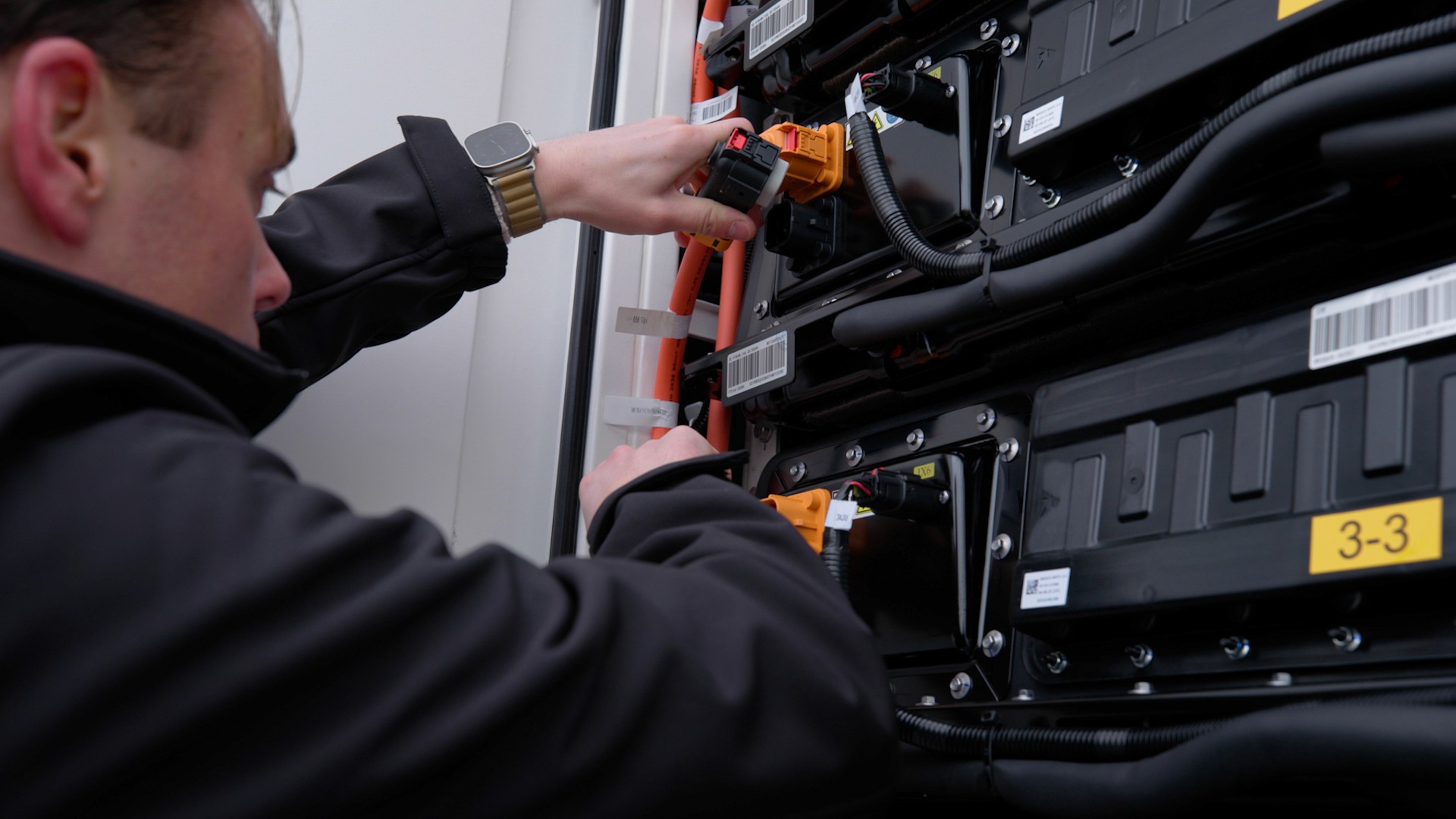
Mobile energy storage refers to a transportable battery system capable of supplying power (AC) and/or storing energy from a source such as grid power, solar energy, or a generator. Demand is increasing due to grid congestion, stricter emission regulations, and the ongoing electrification of equipment and transport.
Noise regulations also play a role: ChargeBlock systems operate virtually silently, which is particularly relevant in city centers and for night shifts. In addition, energy storage enables peak shaving, allowing the operation of heavy consumers even with a smaller grid connection or limited temporary construction power.
What is mobile energy storage and why is demand increasing?
Mobile energy storage refers to a transportable battery system capable of supplying power (AC) and/or storing energy from a source such as grid power, solar energy, or a generator. Demand is increasing due to grid congestion, stricter emission regulations, and the ongoing electrification of equipment and transport.
Noise regulations also play a role: ChargeBlock systems operate virtually silently, which is particularly relevant in city centers and for night shifts. In addition, energy storage enables peak shaving, allowing the operation of heavy consumers even with a smaller grid connection or limited temporary construction power.
What is mobile energy storage and why is demand increasing?
Mobile energy storage refers to a transportable battery system capable of supplying power (AC) and/or storing energy from a source such as grid power, solar energy, or a generator. Demand is increasing due to grid congestion, stricter emission regulations, and the ongoing electrification of equipment and transport.
Noise regulations also play a role: ChargeBlock systems operate virtually silently, which is particularly relevant in city centers and for night shifts. In addition, energy storage enables peak shaving, allowing the operation of heavy consumers even with a smaller grid connection or limited temporary construction power.
Battery containers
ChargeBlock
Battery container on the construction site
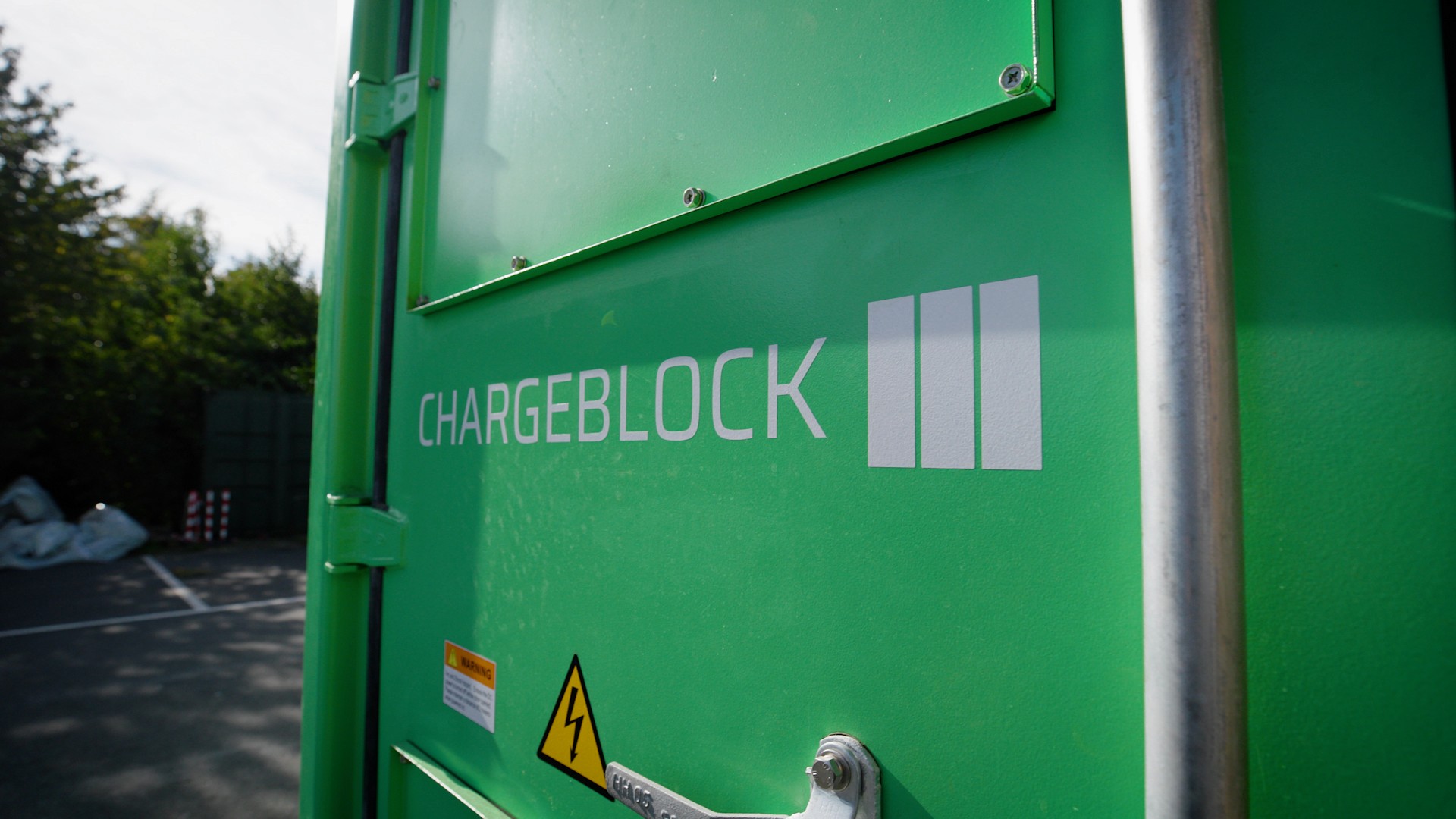
On construction sites with limited grid connections or strict emission limits, diesel generators are often inadequate or no longer permitted. A mobile battery container provides the same peak capacity for cranes, site offices, lighting, and electric tools, but operates silently, with zero emissions, and without the need for on-site fuel logistics.
Temporary on-site power supply
For a temporary project, applying for a permanent grid connection upgrade for just a few months of work is inefficient. The battery container is installed, connected to the available construction power or a generator, and immediately provides sufficient power for the simultaneous use of multiple devices. Once the project is completed, the container is relocated to the next site.
Energy solution for the construction sector
Case study: Rotterdam construction project


Battery containers
ChargeBlock
Battery container on the construction site
On construction sites with limited grid connections or strict emission limits, diesel generators are often inadequate or no longer permitted. A mobile battery container provides the same peak capacity for cranes, site offices, lighting, and electric tools, but operates silently, with zero emissions, and without the need for on-site fuel logistics.
Temporary on-site power supply
For a temporary project, applying for a permanent grid connection upgrade for just a few months of work is inefficient. The battery container is installed, connected to the available construction power or a generator, and immediately provides sufficient power for the simultaneous use of multiple devices. Once the project is completed, the container is relocated to the next site.
Energy solution for the construction sector
Case study: Rotterdam construction project
Battery containers
ChargeBlock
Battery container on the construction site
On construction sites with limited grid connections or strict emission limits, diesel generators are often inadequate or no longer permitted. A mobile battery container provides the same peak capacity for cranes, site offices, lighting, and electric tools, but operates silently, with zero emissions, and without the need for on-site fuel logistics.
Temporary on-site power supply
For a temporary project, applying for a permanent grid connection upgrade for just a few months of work is inefficient. The battery container is installed, connected to the available construction power or a generator, and immediately provides sufficient power for the simultaneous use of multiple devices. Once the project is completed, the container is relocated to the next site.
Energy solution for the construction sector
Case study: Rotterdam construction project
Charging hub
Battery containers
Charging hub for electric trucks
In addition to construction sites, mobile energy storage is deployed as a temporary charging hub for electric transport. When a distribution site has insufficient grid capacity for multiple fast chargers simultaneously, a ChargeBlock battery container is charged at a location with available grid capacity and subsequently placed at the charging plaza. During peak hours, the battery delivers additional power to the fast chargers, enabling trucks to charge faster without waiting for lengthy grid upgrades.


Charging hub
Battery containers
Charging hub for electric trucks
In addition to construction sites, mobile energy storage is deployed as a temporary charging hub for electric transport. When a distribution site has insufficient grid capacity for multiple fast chargers simultaneously, a ChargeBlock battery container is charged at a location with available grid capacity and subsequently placed at the charging plaza. During peak hours, the battery delivers additional power to the fast chargers, enabling trucks to charge faster without waiting for lengthy grid upgrades.
Charging hub
Battery containers
Charging hub for electric trucks
In addition to construction sites, mobile energy storage is deployed as a temporary charging hub for electric transport. When a distribution site has insufficient grid capacity for multiple fast chargers simultaneously, a ChargeBlock battery container is charged at a location with available grid capacity and subsequently placed at the charging plaza. During peak hours, the battery delivers additional power to the fast chargers, enabling trucks to charge faster without waiting for lengthy grid upgrades.

Also suitable for events and temporary projects
In addition to construction sites, the same mobile battery container is also deployed at events, festivals, and other short-term projects that require a quiet, emission-free power supply. Learn how this works in practice in battery containers at events and festivals or view the comparison with a traditional diesel generator.

Renting a battery container for a temporary project
Not every project requires a purchase. For short-term use, a construction project of several months, a one-off event, or a pilot, ChargeBlock also offers battery container rentals. View the rental options for a temporary project and the associated conditions.
Also suitable for events and temporary projects
In addition to construction sites, the same mobile battery container is also deployed at events, festivals, and other short-term projects that require a quiet, emission-free power supply. Learn how this works in practice in battery containers at events and festivals or view the comparison with a traditional diesel generator.
Renting a battery container for a temporary project
Not every project requires a purchase. For short-term use, a construction project of several months, a one-off event, or a pilot, ChargeBlock also offers battery container rentals. View the rental options for a temporary project and the associated conditions.
Also suitable for events and temporary projects
In addition to construction sites, the same mobile battery container is also deployed at events, festivals, and other short-term projects that require a quiet, emission-free power supply. Learn how this works in practice in battery containers at events and festivals or view the comparison with a traditional diesel generator.
Renting a battery container for a temporary project
Not every project requires a purchase. For short-term use, a construction project of several months, a one-off event, or a pilot, ChargeBlock also offers battery container rentals. View the rental options for a temporary project and the associated conditions.
Mobile energy storage
Blog
Related content from this page


Mobile energy storage
Blog
Related content from this page
Mobile energy storage
Blog
Related content from this page
Peak shaving: reducing peak load and limiting grid costs
On construction sites, mobile storage supports zero-emission operations by powering cranes, site cabins, lighting, and electric tools, even when the grid connection capacity is limited. At events, a battery system handles the sudden peak consumption of lighting, audio, and catering, without smoke, odor, or vibration.
For temporary charging hubs, the deployment of ChargeBlock enables fast charging when the grid capacity is not (yet) sufficient; the battery can charge gradually and subsequently deliver high power to the chargers. This establishes a flexible energy buffer that adapts to the schedule, the season, and the requirements of the location.
Peak shaving: reducing peak load and limiting grid costs
On construction sites, mobile storage supports zero-emission operations by powering cranes, site cabins, lighting, and electric tools, even when the grid connection capacity is limited. At events, a battery system handles the sudden peak consumption of lighting, audio, and catering, without smoke, odor, or vibration.
For temporary charging hubs, the deployment of ChargeBlock enables fast charging when the grid capacity is not (yet) sufficient; the battery can charge gradually and subsequently deliver high power to the chargers. This establishes a flexible energy buffer that adapts to the schedule, the season, and the requirements of the location.
Peak shaving: reducing peak load and limiting grid costs
On construction sites, mobile storage supports zero-emission operations by powering cranes, site cabins, lighting, and electric tools, even when the grid connection capacity is limited. At events, a battery system handles the sudden peak consumption of lighting, audio, and catering, without smoke, odor, or vibration.
For temporary charging hubs, the deployment of ChargeBlock enables fast charging when the grid capacity is not (yet) sufficient; the battery can charge gradually and subsequently deliver high power to the chargers. This establishes a flexible energy buffer that adapts to the schedule, the season, and the requirements of the location.

Power, capacity and charging speed: how ChargeBlock sizes systems
The correct configuration is determined by three core values: the power (kW) for simultaneous peaks, the energy capacity (kWh) for the required duration of use, and the chosen charging and discharging strategy. For a short, high peak, the available power is the decisive factor, whereas a long working day without recharging requires high capacity.
Additionally, consider the available charging point: a small connection increases charging times, which requires a larger buffer or a smarter charging strategy. ChargeBlock assists in collecting consumption profiles to select the appropriate battery and inverter based on this data.
Power, capacity and charging speed: how ChargeBlock sizes systems
The correct configuration is determined by three core values: the power (kW) for simultaneous peaks, the energy capacity (kWh) for the required duration of use, and the chosen charging and discharging strategy. For a short, high peak, the available power is the decisive factor, whereas a long working day without recharging requires high capacity.
Additionally, consider the available charging point: a small connection increases charging times, which requires a larger buffer or a smarter charging strategy. ChargeBlock assists in collecting consumption profiles to select the appropriate battery and inverter based on this data.
Power, capacity and charging speed: how ChargeBlock sizes systems
The correct configuration is determined by three core values: the power (kW) for simultaneous peaks, the energy capacity (kWh) for the required duration of use, and the chosen charging and discharging strategy. For a short, high peak, the available power is the decisive factor, whereas a long working day without recharging requires high capacity.
Additionally, consider the available charging point: a small connection increases charging times, which requires a larger buffer or a smarter charging strategy. ChargeBlock assists in collecting consumption profiles to select the appropriate battery and inverter based on this data.
On-site deployment: transport, connection, and plug-and-play
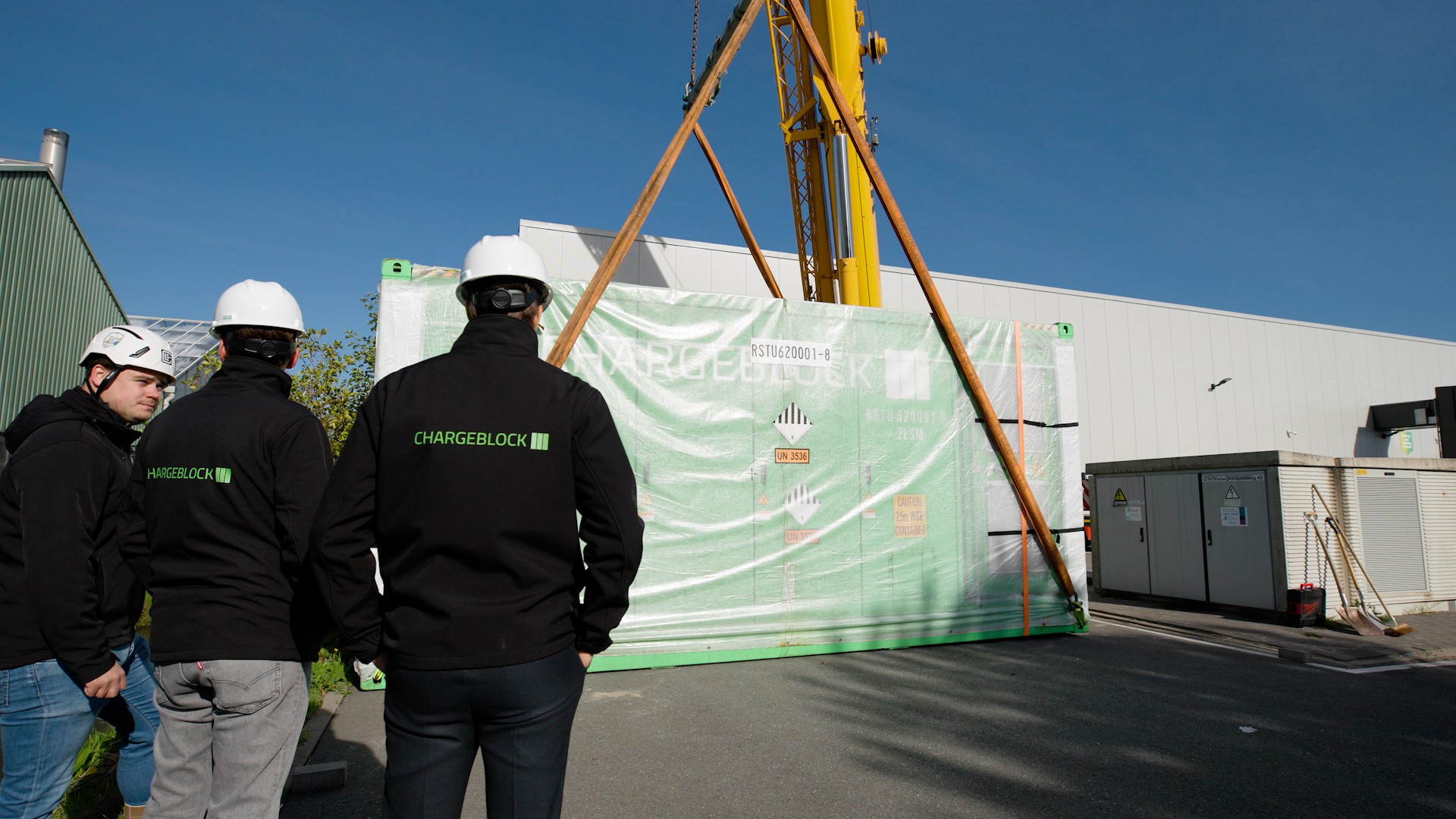
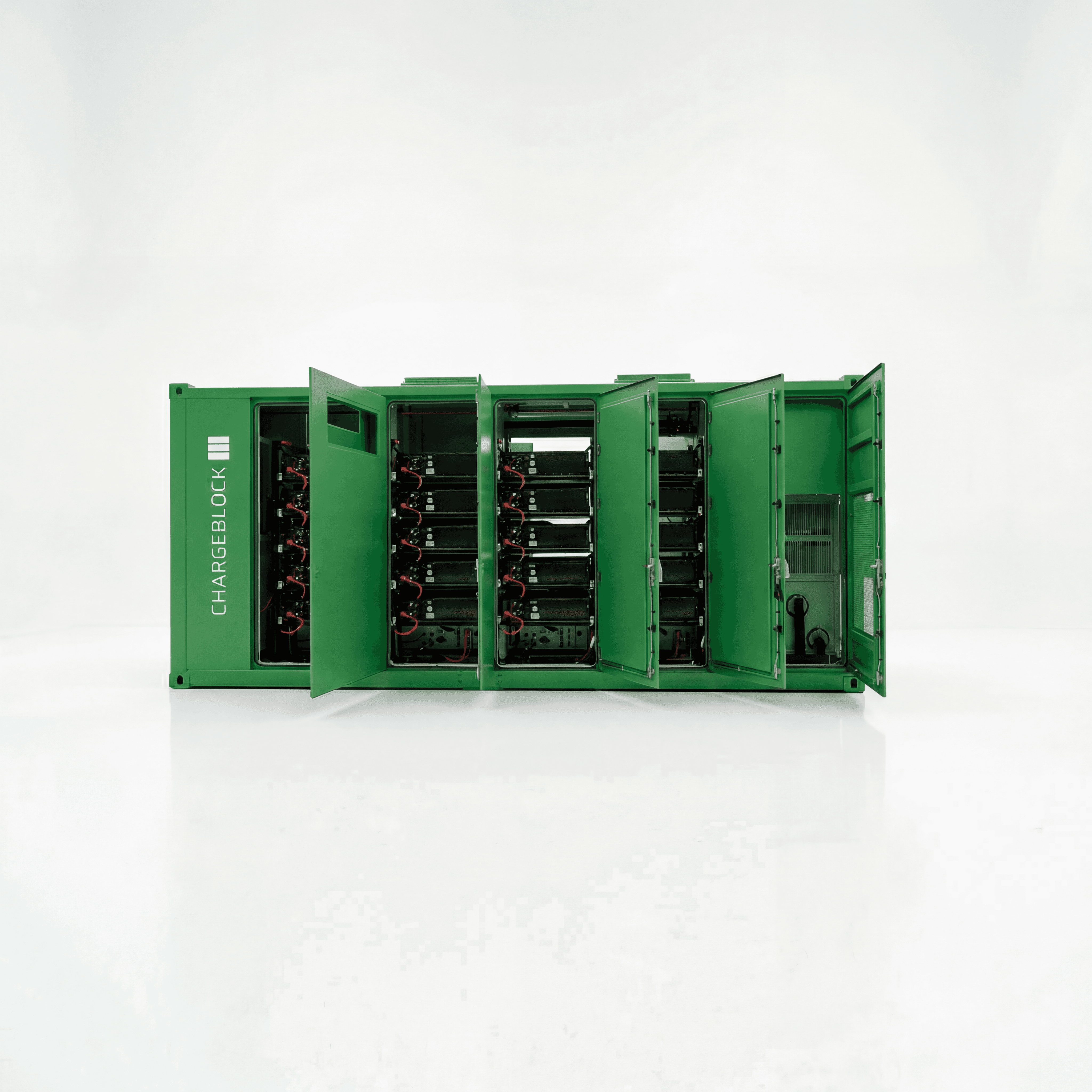
Mobile systems are designed for rapid deployment: they are moved with a forklift or crane, positioned, connected, and are immediately operational. A ChargeBlock battery container integrates battery modules, inverters, protection devices, and monitoring into a single robust unit suitable for outdoor use and varying conditions.
Key considerations include connection options, such as 230/400V, compatibility with existing distribution boards, and the option to connect systems in parallel for additional power or capacity. Remote monitoring also tracks the state of charge, load, and efficiency, helping to prevent downtime.
On-site deployment: transport, connection, and plug-and-play
Mobile systems are designed for rapid deployment: they are moved with a forklift or crane, positioned, connected, and are immediately operational. A ChargeBlock battery container integrates battery modules, inverters, protection devices, and monitoring into a single robust unit suitable for outdoor use and varying conditions.
Key considerations include connection options, such as 230/400V, compatibility with existing distribution boards, and the option to connect systems in parallel for additional power or capacity. Remote monitoring also tracks the state of charge, load, and efficiency, helping to prevent downtime.
On-site deployment: transport, connection, and plug-and-play
Mobile systems are designed for rapid deployment: they are moved with a forklift or crane, positioned, connected, and are immediately operational. A ChargeBlock battery container integrates battery modules, inverters, protection devices, and monitoring into a single robust unit suitable for outdoor use and varying conditions.
Key considerations include connection options, such as 230/400V, compatibility with existing distribution boards, and the option to connect systems in parallel for additional power or capacity. Remote monitoring also tracks the state of charge, load, and efficiency, helping to prevent downtime.
Frequently asked questions about mobile energy storage
Here you will find answers to the most frequently asked questions.
How does a battery container mitigate grid congestion and peak demand?
Our battery containers are deployed for peak shaving, zero feed-in, and behind-the-meter optimization. Intelligent use of stored energy avoids exceeding contracted capacity and limits grid dependence. This creates room for expansion without requiring immediate grid reinforcement.
Can the battery container be integrated with our existing EMS or aggregator?
Yes. ChargeBlock systems are compatible with the most commonly used EMS platforms and with aggregators participating in flexibility markets. Via standard communication protocols, the battery container can be controlled within an existing energy management system, aligning charging and discharging times with market prices, grid conditions, or the local consumption profile.
Is battery storage financially viable for our organization?
This largely depends on the duration of use and the operational profile. For a short-term or one-off project, renting is often more cost-effective than purchasing, as you do not tie up capital in an asset that is only used for a few months. For structural or recurring use, such as across multiple locations per year, purchasing can offer a faster return on investment. ChargeBlock can calculate these scenarios for you based on your expected usage.
Is it also possible to rent a battery container instead of purchasing one?
Yes, in addition to purchase, ChargeBlock offers rental of battery containers, specifically aimed at temporary projects such as construction sites, events, and pilots. View the rental options for the possibilities and conditions.
Is mobile energy storage also suitable for a one-off event?
Yes. For a one-time event, renting is usually the most logical choice: the container is installed and connected for the duration of the event, and collected afterwards.
Frequently asked questions about mobile energy storage
Here you will find answers to the most frequently asked questions.
How does a battery container mitigate grid congestion and peak demand?
Our battery containers are deployed for peak shaving, zero feed-in, and behind-the-meter optimization. Intelligent use of stored energy avoids exceeding contracted capacity and limits grid dependence. This creates room for expansion without requiring immediate grid reinforcement.
Can the battery container be integrated with our existing EMS or aggregator?
Yes. ChargeBlock systems are compatible with the most commonly used EMS platforms and with aggregators participating in flexibility markets. Via standard communication protocols, the battery container can be controlled within an existing energy management system, aligning charging and discharging times with market prices, grid conditions, or the local consumption profile.
Is battery storage financially viable for our organization?
This largely depends on the duration of use and the operational profile. For a short-term or one-off project, renting is often more cost-effective than purchasing, as you do not tie up capital in an asset that is only used for a few months. For structural or recurring use, such as across multiple locations per year, purchasing can offer a faster return on investment. ChargeBlock can calculate these scenarios for you based on your expected usage.
Is it also possible to rent a battery container instead of purchasing one?
Yes, in addition to purchase, ChargeBlock offers rental of battery containers, specifically aimed at temporary projects such as construction sites, events, and pilots. View the rental options for the possibilities and conditions.
Is mobile energy storage also suitable for a one-off event?
Yes. For a one-time event, renting is usually the most logical choice: the container is installed and connected for the duration of the event, and collected afterwards.
Frequently asked questions about mobile energy storage
Here you will find answers to the most frequently asked questions.
How does a battery container mitigate grid congestion and peak demand?
Our battery containers are deployed for peak shaving, zero feed-in, and behind-the-meter optimization. Intelligent use of stored energy avoids exceeding contracted capacity and limits grid dependence. This creates room for expansion without requiring immediate grid reinforcement.
Can the battery container be integrated with our existing EMS or aggregator?
Yes. ChargeBlock systems are compatible with the most commonly used EMS platforms and with aggregators participating in flexibility markets. Via standard communication protocols, the battery container can be controlled within an existing energy management system, aligning charging and discharging times with market prices, grid conditions, or the local consumption profile.
Is battery storage financially viable for our organization?
This largely depends on the duration of use and the operational profile. For a short-term or one-off project, renting is often more cost-effective than purchasing, as you do not tie up capital in an asset that is only used for a few months. For structural or recurring use, such as across multiple locations per year, purchasing can offer a faster return on investment. ChargeBlock can calculate these scenarios for you based on your expected usage.
Is it also possible to rent a battery container instead of purchasing one?
Yes, in addition to purchase, ChargeBlock offers rental of battery containers, specifically aimed at temporary projects such as construction sites, events, and pilots. View the rental options for the possibilities and conditions.
Is mobile energy storage also suitable for a one-off event?
Yes. For a one-time event, renting is usually the most logical choice: the container is installed and connected for the duration of the event, and collected afterwards.

Safety, regulations and sustainability at ChargeBlock
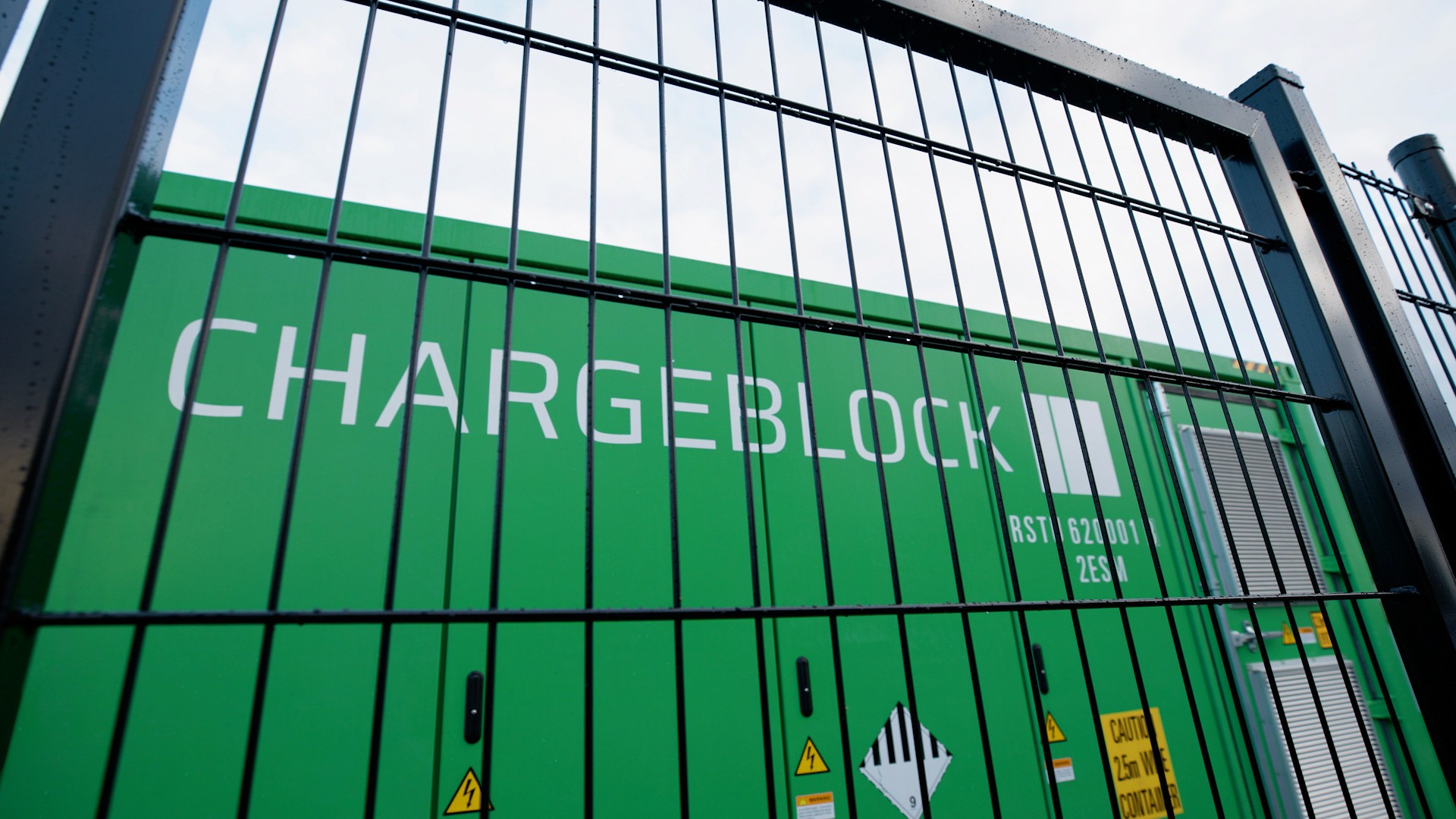
Safe operation begins with proper thermal management, reliable fire detection, appropriate electrical protections, and correct placement with sufficient distance, ventilation, and a suitable underground. ChargeBlock systems comply with the required certifications and feature emergency stop provisions for safe transport and storage. Please note that regulations and permits may vary by municipality. The sustainability gain lies primarily in avoiding diesel consumption, reducing local emissions, and managing energy more efficiently through peak shaving and smart charging. The more operating hours, the sooner the benefits of a ChargeBlock system become visible.
Mobile energy storage from ChargeBlock is particularly valuable in locations where flexibility, emission reduction, and security of supply converge. By properly aligning power, capacity, and charging infrastructure, you ensure a quiet and reliable energy supply that can scale with every project.
Safety, regulations and sustainability at ChargeBlock
Safe operation begins with proper thermal management, reliable fire detection, appropriate electrical protections, and correct placement with sufficient distance, ventilation, and a suitable underground. ChargeBlock systems comply with the required certifications and feature emergency stop provisions for safe transport and storage. Please note that regulations and permits may vary by municipality. The sustainability gain lies primarily in avoiding diesel consumption, reducing local emissions, and managing energy more efficiently through peak shaving and smart charging. The more operating hours, the sooner the benefits of a ChargeBlock system become visible.
Mobile energy storage from ChargeBlock is particularly valuable in locations where flexibility, emission reduction, and security of supply converge. By properly aligning power, capacity, and charging infrastructure, you ensure a quiet and reliable energy supply that can scale with every project.
Safety, regulations and sustainability at ChargeBlock
Safe operation begins with proper thermal management, reliable fire detection, appropriate electrical protections, and correct placement with sufficient distance, ventilation, and a suitable underground. ChargeBlock systems comply with the required certifications and feature emergency stop provisions for safe transport and storage. Please note that regulations and permits may vary by municipality. The sustainability gain lies primarily in avoiding diesel consumption, reducing local emissions, and managing energy more efficiently through peak shaving and smart charging. The more operating hours, the sooner the benefits of a ChargeBlock system become visible.
Mobile energy storage from ChargeBlock is particularly valuable in locations where flexibility, emission reduction, and security of supply converge. By properly aligning power, capacity, and charging infrastructure, you ensure a quiet and reliable energy supply that can scale with every project.
Products in the spotlight

Products in the spotlight
Products in the spotlight
and scalable battery storage
Customer service
Solutions
Subscribe to our newsletter to stay informed.
By signing up, you agree to the privacy statement and the general terms and conditions of ChargeBlock B.V. You can unsubscribe at any time.
Rated
4.8/5.0

Developed
in the Netherlands

and scalable battery storage
Customer service
Solutions
Subscribe to our newsletter to stay informed.
By signing up, you agree to the privacy statement and the general terms and conditions of ChargeBlock B.V. You can unsubscribe at any time.
Rated
4.8/5.0
Developed
in the Netherlands
and scalable battery storage
Customer service
Solutions
Subscribe to our newsletter to stay informed.
By signing up, you agree to the privacy statement and the general terms and conditions of ChargeBlock B.V. You can unsubscribe at any time.
Rated
4.8/5.0
Developed
in the Netherlands