Electrify without committing your entire capital expenditure
Companies looking to electrify often invest not once, but twice. First in electric trucks, machinery, or installations. Then, due to grid congestion, increasingly in the energy supply required to operate that equipment. A battery container resolves that second challenge, but also represents a substantial investment itself. In this blog, you will read how to spread this investment, keeping your capital available for your equipment and operational growth. And how ChargeBlock and Beequip collaborate in this area.
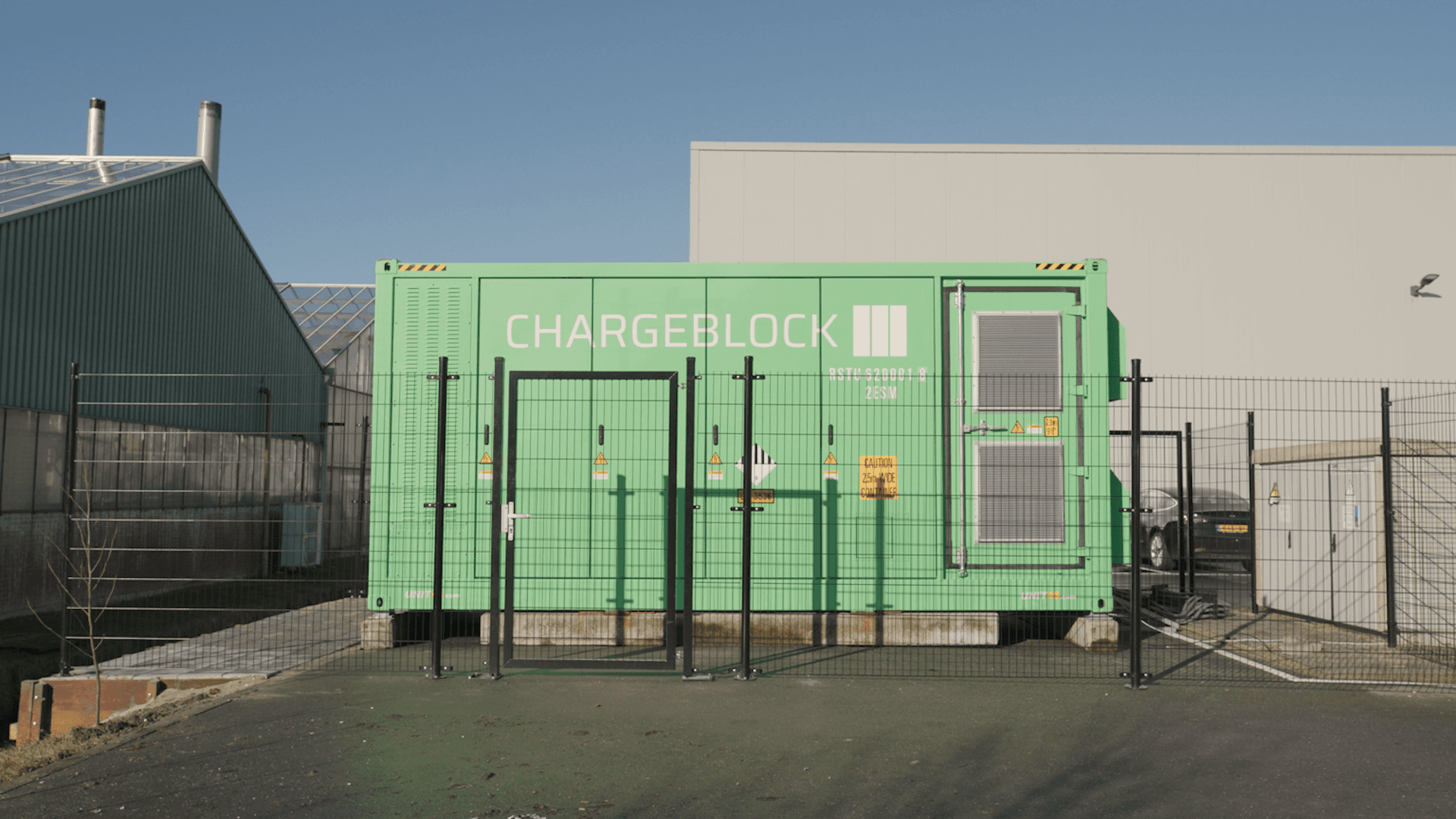
Electrify without committing your entire capital expenditure
Companies looking to electrify often invest not once, but twice. First in electric trucks, machinery, or installations. Then, due to grid congestion, increasingly in the energy supply required to operate that equipment. A battery container resolves that second challenge, but also represents a substantial investment itself. In this blog, you will read how to spread this investment, keeping your capital available for your equipment and operational growth. And how ChargeBlock and Beequip collaborate in this area.

The bottleneck is shifting from equipment to the grid connection
Transport companies are investing in electric trucks and charging infrastructure. Construction and infrastructure companies are switching to electric equipment. Manufacturing companies are expanding their machinery and facilities. Increasingly, it is not the equipment, but the grid connection that reaches its limit.
Due to grid congestion, a company cannot always obtain the required extra capacity, and an upgraded connection can take years. This means electric vehicles cannot charge simultaneously, new equipment cannot be fully deployed, or a production line cannot be expanded.
A battery container for businesses helps make smarter use of available grid capacity. The battery charges when surplus power is available and discharges during peak times, keeping you within your contracted capacity. This allows you to expand—such as adding charging infrastructure—without waiting for a grid upgrade.
Why the investment must fit as precisely as the technology
A battery container is sized according to its objective: reducing costs, shaving peaks, deferring grid upgrades, or maximizing self-consumption of solar power. This determines the required power output and storage capacity, and consequently the investment. Therefore, the cost of a battery container varies significantly: from a compact system to a 20ft container offering up to 3.2 MWh of storage and 1.6 MW of power.
For businesses simultaneously investing in electric equipment, this expenditure comes on top of already significant capital requirements. Every euro tied up in energy infrastructure cannot be allocated to vehicles, machinery, personnel, inventory, or operational growth.
The impact of committing your capital budget
Purchasing with capital reserves requires paying for the battery container upfront, while returns materialize over subsequent years: lower grid fees through reduced peak demand, fewer contracted capacity overruns, increased solar self-consumption, and the capacity to expand your fleet or production. This has practical consequences:
A reduced financial buffer for unexpected expenses or operational setbacks.
Less capital available for other investments, such as the electric trucks or machinery that require the battery in the first place.
Project delays, as budget must be accumulated before electrification can proceed.
Financing restructures this balance. You distribute the investment over the operating life of the battery container, aligning the system's costs more closely with its returns.
Financing a battery container: how it works
When financing a battery container, you do not pay the total purchase price upfront, but a fixed periodic fee. The battery container is treated as a business asset, comparable to a truck, crane, or excavator. This is the core focus of Beequip: financing heavy equipment for SMEs, including energy equipment. Beequip has previously financed mobile battery systems as alternatives to diesel generators.
An equipment financier evaluates not only the balance sheet, but primarily the equipment being financed. This makes financing accessible to businesses that face tighter constraints with traditional banks. You determine the appropriate structure and term directly with Beequip.
Freeing up capital with existing assets
Do you own unencumbered trucks, machinery, or other equipment? Refinancing via a sale-and-leaseback structure can unlock tied-up capital. You sell the assets to the financier, lease them back, and continue operating them uninterrupted. The unlocked capital can then be deployed toward your electrification plans.
Purchasing, financing, or renting: which route fits your operations?
The most suitable route depends on the duration and frequency of deployment, as well as capital allocation strategy.
Outright purchase: For businesses with sufficient liquidity that intend to deploy the system permanently.
Financing: For businesses requiring long-term deployment while keeping capital free for core equipment and growth. You utilize the system immediately while spreading the capital outlay.
Renting: For deployments lasting several months, such as construction projects, events, or pilot setups. Read more about mobile energy storage for temporary projects.
How ChargeBlock and Beequip work together
ChargeBlock designs the technical energy solution; Beequip provides the financial structure. The process follows four steps:
Analysis: ChargeBlock maps the required power and storage capacity alongside your peak consumption intervals.
System design: We define how the battery integrates with your machinery, charging infrastructure, and solar installations, tailored to your site and expansion requirements.
Financing: Beequip assesses the system's financing structure. Applications are typically processed within 72 hours.
Delivery and commissioning: ChargeBlock delivers, installs, and commissions the battery container, including energy management (EMS) and monitoring.
This ensures the battery container functions as a productive asset that supports operational continuity, electrification, and growth.
Relevant sectors
Transport and logistics: Charging electric trucks when the grid connection cannot support simultaneous charging across the entire fleet.
Construction and infrastructure: Operating electric equipment on sites with restricted grid capacity.
Manufacturing and industry: Absorbing production peaks, maximizing solar self-consumption, and expanding operations without waiting for a grid upgrade.
Read more about battery storage for commercial and industrial use.
Is battery storage technically and financially viable for your business?
ChargeBlock and Beequip provide technical and financial assessments. Contact us with details on your connection, load profile, and operational goals to review the figures.
Frequently asked questions
Can you finance a battery container?
Yes, a battery container can be financed as an operational asset, just like a truck or machine. ChargeBlock determines which system fits your grid connection and consumption profile from a technical perspective. Equipment financier Beequip then provides the financing, eliminating the need to pay the full investment amount upfront.
What is the advantage of financing a battery container instead of purchasing one?
The primary advantage of financing a battery container is that your working capital remains available. Instead of a single upfront payment, you spread the investment over the period during which the battery generates savings. This preserves capacity for vehicles, machinery, personnel, or further growth.
Is financing a battery container the same as renting?
No, financing a battery container is not the same as renting. Financing suits structural deployment, spreading the investment over several years. Renting suits temporary deployment of a few months, such as for a construction project, event, or pilot, after which ChargeBlock collects the container.
Which businesses benefit from financing a battery container?
Financing a battery container is particularly relevant for companies in transport, logistics, construction, infrastructure, and industry that are looking to electrify but face grid congestion. These companies often invest simultaneously in electric equipment and energy storage, making capital preservation essential.
How to start financing a battery container?
Financing a battery container starts with determining the required system specifications. ChargeBlock analyses your grid connection, consumption, and peak loads, providing recommendations for power and capacity. Beequip then prepares a financing proposal for the system based on these findings.

Contact details
Joep Koolen
CCO
The bottleneck is shifting from equipment to the grid connection
Transport companies are investing in electric trucks and charging infrastructure. Construction and infrastructure companies are switching to electric equipment. Manufacturing companies are expanding their machinery and facilities. Increasingly, it is not the equipment, but the grid connection that reaches its limit.
Due to grid congestion, a company cannot always obtain the required extra capacity, and an upgraded connection can take years. This means electric vehicles cannot charge simultaneously, new equipment cannot be fully deployed, or a production line cannot be expanded.
A battery container for businesses helps make smarter use of available grid capacity. The battery charges when surplus power is available and discharges during peak times, keeping you within your contracted capacity. This allows you to expand—such as adding charging infrastructure—without waiting for a grid upgrade.
Why the investment must fit as precisely as the technology
A battery container is sized according to its objective: reducing costs, shaving peaks, deferring grid upgrades, or maximizing self-consumption of solar power. This determines the required power output and storage capacity, and consequently the investment. Therefore, the cost of a battery container varies significantly: from a compact system to a 20ft container offering up to 3.2 MWh of storage and 1.6 MW of power.
For businesses simultaneously investing in electric equipment, this expenditure comes on top of already significant capital requirements. Every euro tied up in energy infrastructure cannot be allocated to vehicles, machinery, personnel, inventory, or operational growth.
The impact of committing your capital budget
Purchasing with capital reserves requires paying for the battery container upfront, while returns materialize over subsequent years: lower grid fees through reduced peak demand, fewer contracted capacity overruns, increased solar self-consumption, and the capacity to expand your fleet or production. This has practical consequences:
A reduced financial buffer for unexpected expenses or operational setbacks.
Less capital available for other investments, such as the electric trucks or machinery that require the battery in the first place.
Project delays, as budget must be accumulated before electrification can proceed.
Financing restructures this balance. You distribute the investment over the operating life of the battery container, aligning the system's costs more closely with its returns.
Financing a battery container: how it works
When financing a battery container, you do not pay the total purchase price upfront, but a fixed periodic fee. The battery container is treated as a business asset, comparable to a truck, crane, or excavator. This is the core focus of Beequip: financing heavy equipment for SMEs, including energy equipment. Beequip has previously financed mobile battery systems as alternatives to diesel generators.
An equipment financier evaluates not only the balance sheet, but primarily the equipment being financed. This makes financing accessible to businesses that face tighter constraints with traditional banks. You determine the appropriate structure and term directly with Beequip.
Freeing up capital with existing assets
Do you own unencumbered trucks, machinery, or other equipment? Refinancing via a sale-and-leaseback structure can unlock tied-up capital. You sell the assets to the financier, lease them back, and continue operating them uninterrupted. The unlocked capital can then be deployed toward your electrification plans.
Purchasing, financing, or renting: which route fits your operations?
The most suitable route depends on the duration and frequency of deployment, as well as capital allocation strategy.
Outright purchase: For businesses with sufficient liquidity that intend to deploy the system permanently.
Financing: For businesses requiring long-term deployment while keeping capital free for core equipment and growth. You utilize the system immediately while spreading the capital outlay.
Renting: For deployments lasting several months, such as construction projects, events, or pilot setups. Read more about mobile energy storage for temporary projects.
How ChargeBlock and Beequip work together
ChargeBlock designs the technical energy solution; Beequip provides the financial structure. The process follows four steps:
Analysis: ChargeBlock maps the required power and storage capacity alongside your peak consumption intervals.
System design: We define how the battery integrates with your machinery, charging infrastructure, and solar installations, tailored to your site and expansion requirements.
Financing: Beequip assesses the system's financing structure. Applications are typically processed within 72 hours.
Delivery and commissioning: ChargeBlock delivers, installs, and commissions the battery container, including energy management (EMS) and monitoring.
This ensures the battery container functions as a productive asset that supports operational continuity, electrification, and growth.
Relevant sectors
Transport and logistics: Charging electric trucks when the grid connection cannot support simultaneous charging across the entire fleet.
Construction and infrastructure: Operating electric equipment on sites with restricted grid capacity.
Manufacturing and industry: Absorbing production peaks, maximizing solar self-consumption, and expanding operations without waiting for a grid upgrade.
Read more about battery storage for commercial and industrial use.
Is battery storage technically and financially viable for your business?
ChargeBlock and Beequip provide technical and financial assessments. Contact us with details on your connection, load profile, and operational goals to review the figures.
Frequently asked questions
Can you finance a battery container?
Yes, a battery container can be financed as an operational asset, just like a truck or machine. ChargeBlock determines which system fits your grid connection and consumption profile from a technical perspective. Equipment financier Beequip then provides the financing, eliminating the need to pay the full investment amount upfront.
What is the advantage of financing a battery container instead of purchasing one?
The primary advantage of financing a battery container is that your working capital remains available. Instead of a single upfront payment, you spread the investment over the period during which the battery generates savings. This preserves capacity for vehicles, machinery, personnel, or further growth.
Is financing a battery container the same as renting?
No, financing a battery container is not the same as renting. Financing suits structural deployment, spreading the investment over several years. Renting suits temporary deployment of a few months, such as for a construction project, event, or pilot, after which ChargeBlock collects the container.
Which businesses benefit from financing a battery container?
Financing a battery container is particularly relevant for companies in transport, logistics, construction, infrastructure, and industry that are looking to electrify but face grid congestion. These companies often invest simultaneously in electric equipment and energy storage, making capital preservation essential.
How to start financing a battery container?
Financing a battery container starts with determining the required system specifications. ChargeBlock analyses your grid connection, consumption, and peak loads, providing recommendations for power and capacity. Beequip then prepares a financing proposal for the system based on these findings.
Contact details
Joep Koolen
CCO
and scalable battery storage
Customer service
Solutions
Subscribe to our newsletter to stay informed.
By signing up, you agree to the privacy statement and the general terms and conditions of ChargeBlock B.V. You can unsubscribe at any time.
Rated
4.8/5.0

Developed
in the Netherlands

and scalable battery storage
Customer service
Solutions
Subscribe to our newsletter to stay informed.
By signing up, you agree to the privacy statement and the general terms and conditions of ChargeBlock B.V. You can unsubscribe at any time.
Rated
4.8/5.0
Developed
in the Netherlands
and scalable battery storage
Customer service
Solutions
Subscribe to our newsletter to stay informed.
By signing up, you agree to the privacy statement and the general terms and conditions of ChargeBlock B.V. You can unsubscribe at any time.
Rated
4.8/5.0
Developed
in the Netherlands